
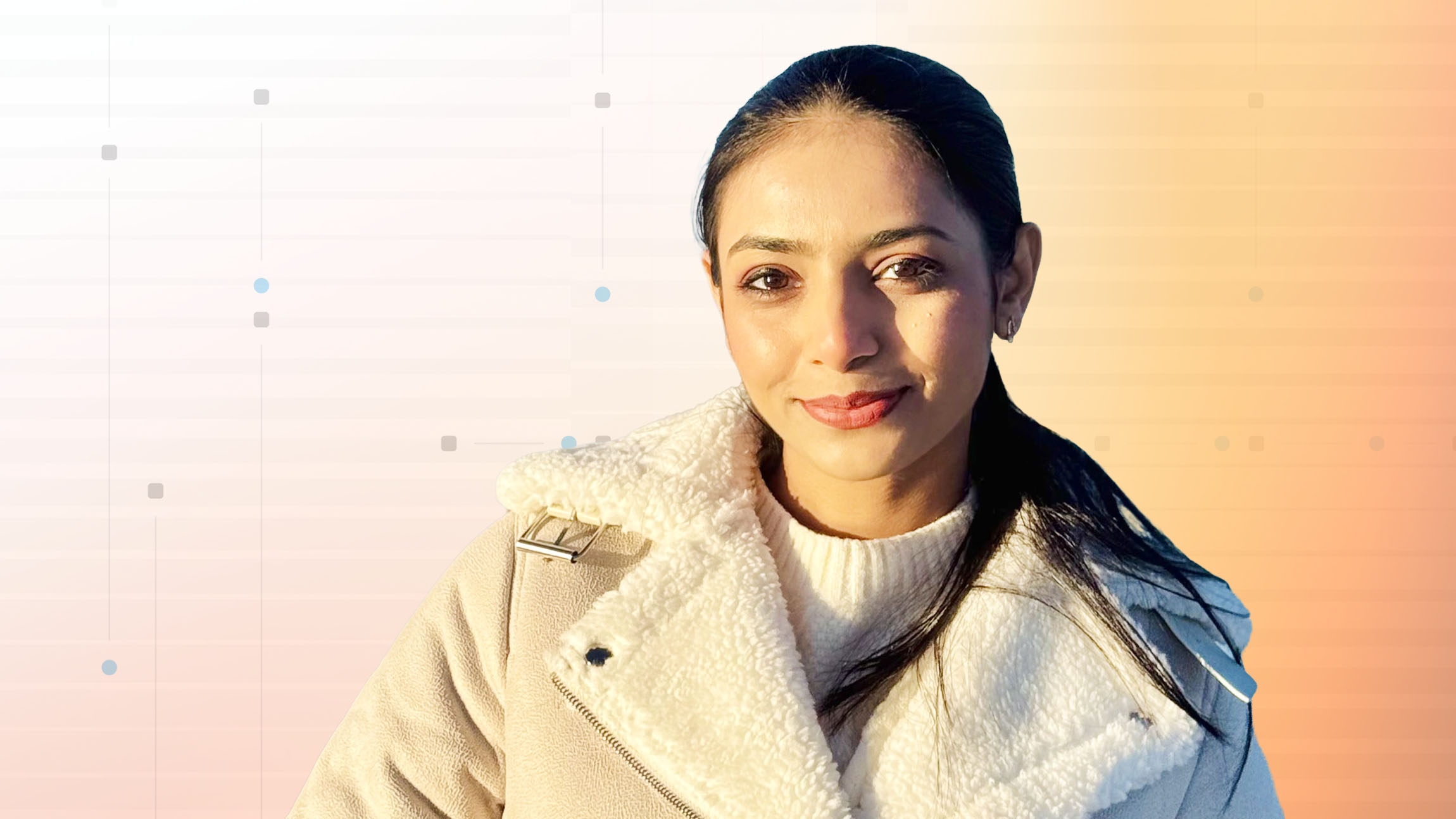
When Kanu Priya was growing up in Nangal-Shama, a small village of 1,500 people in Punjab, India, she didn’t know of any young women who had pursued engineering as a career path.
“I’ve always dreamt of being an engineer, and at the time engineering was not a common path for girls in our community,” she says. “But I was always encouraged by my parents and my teachers to pursue my ambitions.”
With the “unwavering support” of her mother, father, and community, those ambitions have led her to a thriving career in software engineering in IT at Microsoft. Priya now works on AI-powered employee experiences, Copilot agents, and enterprise solutions that improve the ways people interact with technology.
From her first day in Microsoft Digital—the company’s IT organization—in 2021, Priya learned to embrace a culture of ownership, working closely across disciplines to support her colleagues.
“At Microsoft, you are always a full-stack engineer,” Priya says. “You’re not a back-end developer, you’re not a front-end developer, you’re not a dev ops engineer—you are everything. And that was a great thing to know. You do not just own one part of the application, you own everything. That gives you a sense of responsibility.”
Working in IT at Microsoft
Check out our series on working in Microsoft Digital, the company’s IT organization.
- IT on the cutting edge: Working in Microsoft Digital in the era of AI
- Olutunde Makinde: From Lagos to Redmond, a Microsoft IT engineer’s journey
- Building from the inside: Anahit Hovhannisyan’s impact on IT at Microsoft
- Rising to the challenge: How Adelina Radoi makes a difference in IT at Microsoft
- Building a career in IT with a growth mindset: Kanu Priya’s Microsoft journey (this story)
Forging a career path at an early age
That sense of responsibility, ownership, and leadership started for Priya within her own family. Her mother has a master’s degree in architecture, and Priya grew up seeing how education, leadership, and perseverance could open doors for a family and a community.
Priya carried that lesson into school. She had excellent grades in high school and earned admission to the computer science and engineering program at NIT Jalandhar, a well-respected engineering institute. Entering this field still felt like a challenging step for Priya.
Her early career experiences gave her a broad view of how software supports different kinds of businesses. At Publicis Sapient, she worked across e-commerce, fintech, and retail customers. Moving on to Expedia Group, Priya worked as a software development engineer on large-scale systems serving customers globally.
Learning the Microsoft way of engineering
Joining Microsoft nearly five years ago meant learning a new technical stack and a different operating model. Priya came from a Java and Python background, learning .NET and C# as she moved into the company’s engineering environment.
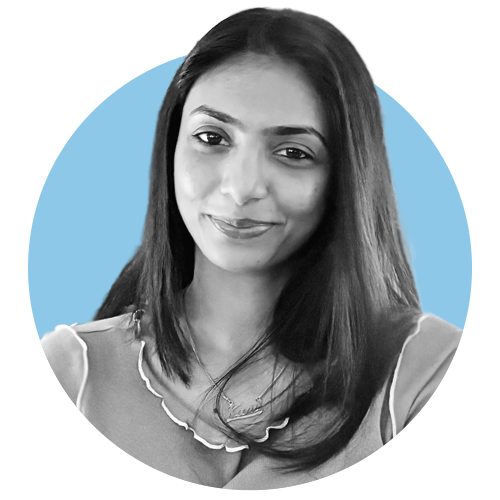
“A growth mindset means being comfortable with being uncomfortable. Every major step in my career happened when I chose to leave something familiar and challenge myself to learn something new.”
Kanu Priya, software engineer, Microsoft Digital
The bigger shift was not about the language or framework, but a change of mindset. It was the expectation that an engineer should understand the customer problem, build the solution, monitor production health, and keep improving the experience after release.
“A growth mindset means being comfortable with being uncomfortable,” Priya says. “Every major step in my career happened when I chose to leave something familiar and challenge myself to learn something new.”
That philosophy matched the way Amit Raghuwanshi, a principal software engineering manager at Microsoft, describes Priya’s approach to her work. Priya has been part of Raghuwanshi’s team for more than four years, keeping up as the work ranged across asset management, ServiceNow development, and—more recently—agentic development using Azure AI Foundry and Copilot Studio.
“Throughout this journey, we keep changing the tech stack and the challenges, and Kanu has shown a really good growth mindset,” Raghuwanshi says. “She’s always willing to take on new challenges in whichever tech stack it may be.”
For Priya, ownership also means staying connected to what happens after the first release.
“Microsoft taught me that engineering doesn’t end when the code is written,” she says. “Real ownership means understanding the problem, delivering the solution, supporting it in production, and continuously improving the experience for customers.”
Building experiences with AI agents
Priya’s current work brings that ownership model into the world of AI-powered employee experiences. She contributed to the development of our Employee Device Information agent, a self-service experience that helps Microsoft employees manage primary devices and correct inaccurate device information and assignments.
The work matters to our organization, because device data can create friction for employees and support teams when it’s wrong or difficult to update. The agent reduced 70% of manual effort for support teams and BPO organizations by automating work that previously required human intervention.
Priya also contributed to the first version of a purchase experience agent that helps employees explore available devices, compare options, and understand recommendations based on employee persona and company requirements. Then they can move through device selection using a unified, conversational experience.
Raghuwanshi points to the enterprise device work as an example of Priya’s ability to learn quickly and work from the problem outward. Priya was part of that work from the very beginning, helping launch the agent with Copilot Studio so employees could answer device questions and resolve requests quickly.
“The AI era is one of the most exciting shifts I’ve seen in technology. It isn’t just helping us work faster; it’s helping us reimagine how we solve problems and create experiences for people.”
Kanu Priya, software engineer, Microsoft Digital
Microsoft dev teams are also changing how they approach solving future problems. Raghuwanshi says AI is now part of the software development lifecycle, from requirements and specifications through code and deployment. The power of AI has also added a new design question for just about any business process: Can an agent help solve this?
Priya sees that change as more than just a productivity gain.
“The AI era is one of the most exciting shifts I’ve seen in technology,” she says. “It isn’t just helping us work faster; it’s helping us reimagine how we solve problems and create experiences for people.”
Today, Priya is working on next-generation multi-agent experiences that bring device selection and purchasing workflows directly into Microsoft 365 through Copilot-powered experiences.
Raghuwanshi connects that work back to the same trait that brought Priya into engineering in the first place: Agility.
“She is a very fast learner,” Raghuwanshi says. “You give her a new problem and she quickly adapts, then starts showing further curiosity.”
Priya’s promotion in 2023 was an important career milestone, and she credits mentorship from Raghuwanshi and support from teammate Shreekantha Tarikere Indraiah as important factors in that growth.
Helping others follow her path
Priya’s story circles back to Nangal-Shama. During a recent visit home, a young woman from her neighborhood told her, “I want to be like you; I want to be where you are one day.” She says the moment filled her with pride.
“I think that’s what matters: clearing paths for the kids who can dream big,” Priya says. “I always want to make sure people from my hometown are getting resources and opportunities.”
For Priya, this is what it means to succeed at Microsoft—and beyond.
“I think success is not about reaching a destination,” she says. “It’s about continuing to grow, learn, and create opportunities for others along the way.”
Key takeaways
Keep these ideas in mind when as you encourage your own employees to embrace a growth mindset and build agentic AI experiences:
- Growth comes from stepping outside your comfort zone. Kanu Priya built her career by embracing new challenges and unfamiliar technologies, rather than staying with what she already knew.
- Ownership means solving the whole problem, not just writing code. Microsoft’s engineering culture encourages developers to understand customer needs, build solutions, support them in production, and continuously improve the experience.
- Start with employee pain points and work backward. Priya’s work on AI-powered device experiences focused on reducing friction and making it easier for employees to get information and choose the right devices.
- AI is transforming both software development and employee experiences. Teams are using AI throughout the engineering lifecycle while also creating new agent-powered ways for employees to interact with services.
- Curiosity and adaptability are critical skills in the AI era. Employee success is often marked by a willingness to quickly adapt to changing business needs.
- Success is about creating examples and opportunities for others. Priya’s journey demonstrates how visible role models can inspire others to pursue their goals and strive for careers they may not have previously imagined.
Try it out
Related links
- Read more about how ‘Eddie’ is helping our employees procure and manage their devices.
- Check out what it’s like working at the cutting edge of IT with Microsoft Digital.
- Explore how we’re extending enterprise AI internally with custom retrieval agents.
- See how we’re building API-powered agents for internal enterprise scenarios.
