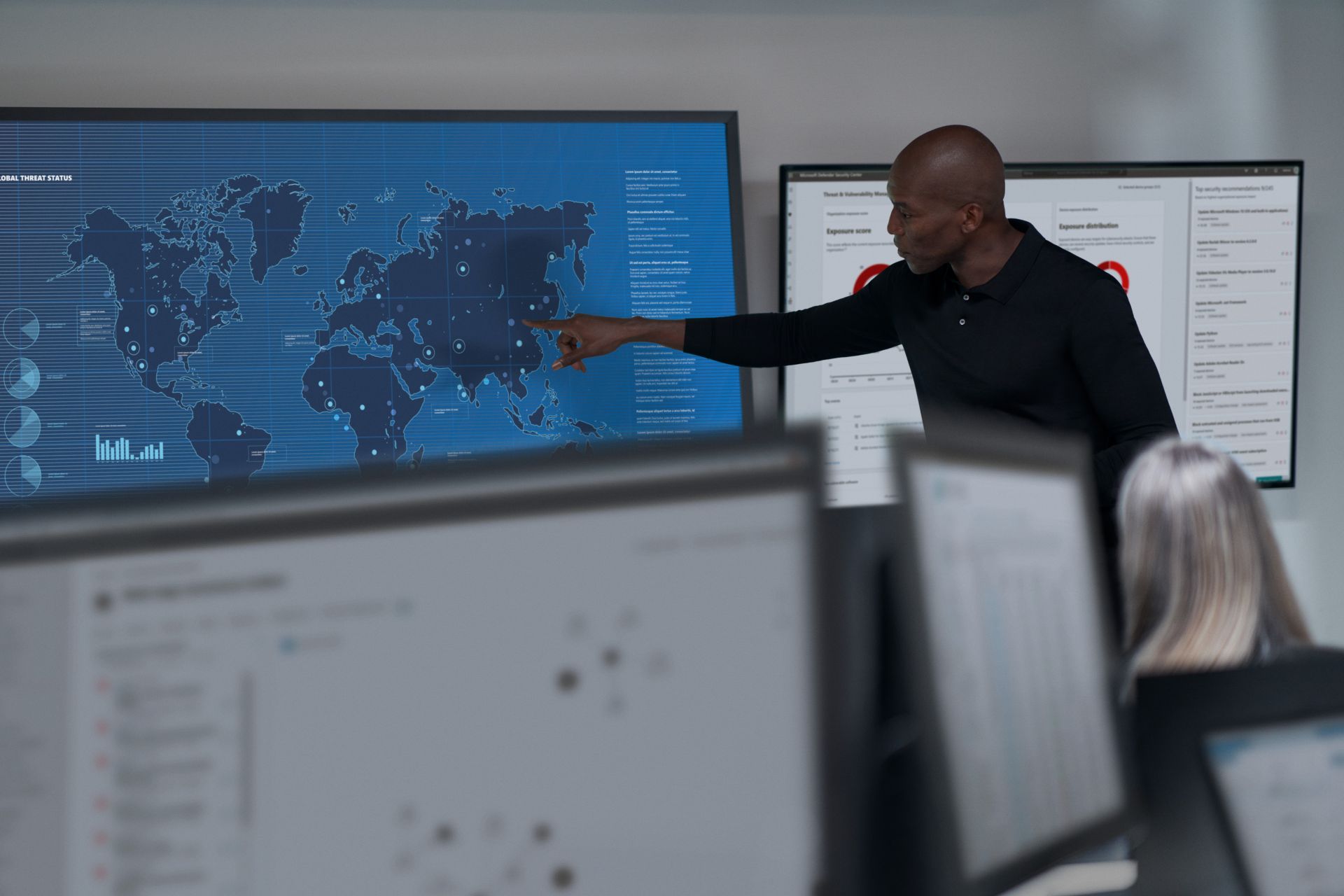


This year, we have seen five significant security paradigm shifts in our industry. This includes the acknowledgment that the greater the diversity of our data sets, the better the AI and machine learning outcomes. This diversity gives us an advantage over our cyber adversaries and improves our threat intelligence. It allows us to respond swiftly and effectively, addressing one of the most difficult challenges for any security team. For Microsoft, our threat protection is built on an unparalleled cloud ecosystem that powers scalability, pattern recognition, and signal processing to detect threats at speed, while correlating these signals accurately to understand how the threat entered your environment, what it affected, and how it currently impacts your organization. The AI capabilities built into Microsoft Security solutions are trained on 8 trillion daily threat signals from a wide variety of products, services, and feeds from around the globe. Because the data is diverse, AI and machine learning algorithms can detect threats in milliseconds.
All security teams need insights based on diverse data sets to gain real-time protection for the breadth of their digital estates. Greater diversity fuels better AI and machine learning outcomes, improving threat intelligence and enabling faster, more accurate responses. In the same way, a diverse and inclusive cybersecurity team also drives innovation and diffuses group think.
Jason Zander, Executive Vice President, Microsoft Azure, knows firsthand the advantages organizations experience when embracing cloud-based protections that look for insights based on diverse data sets. Below, he shares how they offer real-time protection for the breadth of their digital estates:
How does diverse data make us safer?
The secret ingredient lies in the cloud itself. The sheer processing power of so many data points allows us to track more than 8 trillion daily signals from a diverse collection of products, services, and the billions of endpoints that touch the Microsoft cloud every month. Microsoft analyzes hundreds of billions of identity authentications and emails looking for fraud, phishing attacks, and other threats. Why am I mentioning all these numbers? It’s to demonstrate how our security operations take petabytes’ worth of data to assess the worldwide threat, then act quickly. We use that data in a loop—get the signals in, analyze them, and create even better defenses. At the same time, we do forensics to see where we can raise the bar.
Microsoft also monitors the dark web and scans 6 trillion IoT messages every day, and we leverage that data as part of our security posture. AI, machine learning, and automation all empower your team by reducing the noise of constant alerts, so your people can focus on meeting the truly challenging threats.
Staying ahead of the latest threats
As the pandemic swept the globe, we were able to identify new COVID-19 themed threats—often in a fraction of a second—before they breached customers’ networks. Microsoft cyber defenders determined that adversaries added new pandemic-themed lures to existing and familiar malware. Cybercriminals are always changing their tactics to take advantage of recent events. Insights based on diverse data sets empower robust real-time protection as our adversaries’ tactics shift.
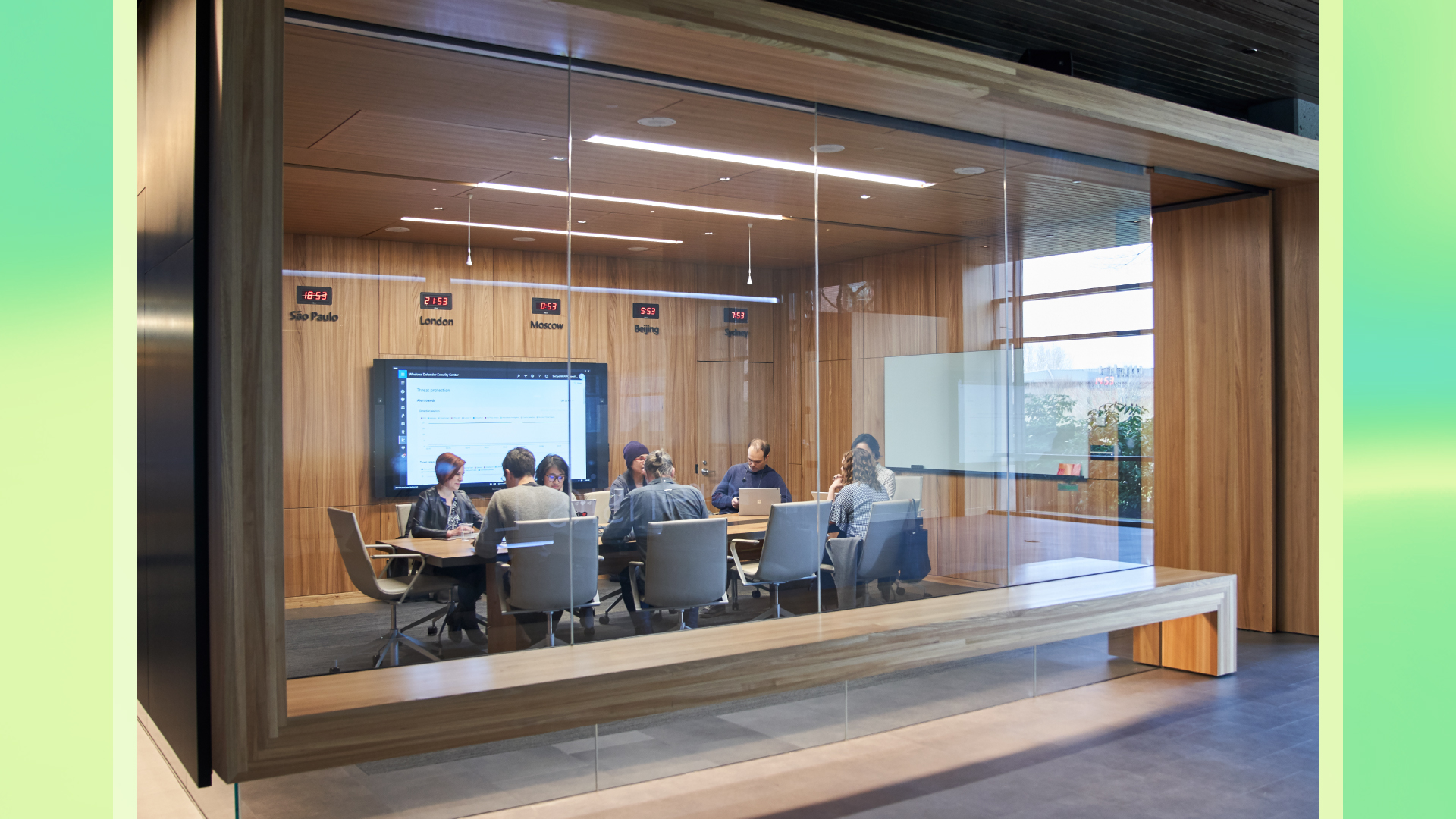
Microsoft also has the Cyber Defense Operations Center (CDOC) running 24/7. We employ over 3,500 full-time security employees and spend about $1 billion in operational expenses (OPEX) every year. In this case, OPEX includes all the people, equipment, algorithms, development, and everything else needed to secure the digital estate. Monitoring those 8 trillion signals is a core part of that system protecting our end users.
Tried and proven technology
If you’re part of the Microsoft ecosystem—Windows, Teams, Microsoft 365, or even Xbox Live—then you’re already benefitting from this technology. Azure Sentinel is built on the same cybersecurity technology we use in-house. As a cloud-native security information and event management (SIEM) solution, Azure Sentinel uses scalable machine learning algorithms to provide a birds-eye view across your entire enterprise, alleviating the stress that comes from sophisticated attacks, frequent alerts, and long resolution time frames. Our research has shown that customers who use Azure Sentinel achieved a 90 percent reduction in alert fatigue.
Just as it does for us, Azure Sentinel can work continuously for your enterprise to:
- Collect data across all users, devices, applications, and infrastructure—both on-premises and in multiple clouds.
- Detect previously undetected threats (while minimizing false positives) using analytics and threat intelligence.
- Investigate threats and hunt down suspicious activities at scale using powerful AI that draws upon years of cybersecurity work at Microsoft.
- Respond to incidents rapidly with built-in orchestration and automation of common tasks.
Diversity equals better protection
As Jason explained, Microsoft is employing AI, machine learning, and quantum computing to shape our responses to cyber threats. We know we must incorporate a holistic approach that includes people at its core because technology alone will not be enough. If we don’t, cybercriminals will exploit group preconceptions and biases. According to research, gender-diverse teams make better business decisions 73 percent of the time. Additionally, teams that are diverse in age and geographic location make better decisions 87 percent of the time. Just as diverse data makes for better cybersecurity, the same holds true for the people in your organization, allowing fresh ideas to flourish. Investing in diverse teams isn’t just the right thing to do—it helps future proof against bias while protecting your organization and customers.
Watch for upcoming posts on how your organization can benefit from integrated, seamless security, and be sure to follow @Ann Johnson and @Jason Zander on Twitter for cybersecurity insights.
To learn more about Microsoft Security solutions visit our website. Bookmark the Security blog to keep up with our expert coverage on security matters. Also, follow us at @MSFTSecurity for the latest news and updates on cybersecurity.