UIs for Low-Literate Users
One of the greatest challenges in providing information and communication technology access is that about 775 million people in the world are completely non-literate and many are able to read only with great difficulty and…
The Editor’s Spotlight: TOCHI Issue 23:3
Microsoft fellowship program supports women in computing
By Susan Dumais, Distinguished Scientist, Microsoft Research Women are woefully under-represented in computing-related fields. Despite earning more than half of all baccalaureate degrees throughout North America, women make up fewer than 20 percent of graduates…
Visualization on Touch Enabled Platforms
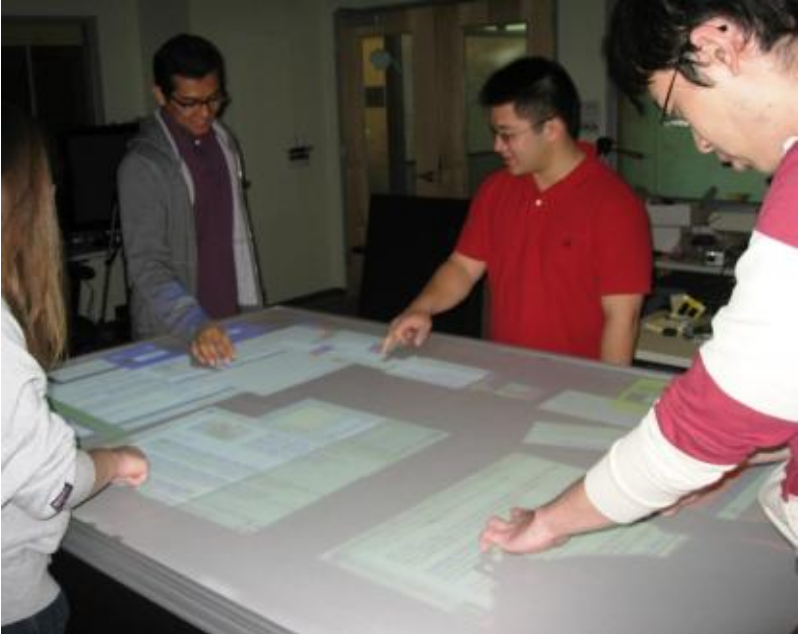
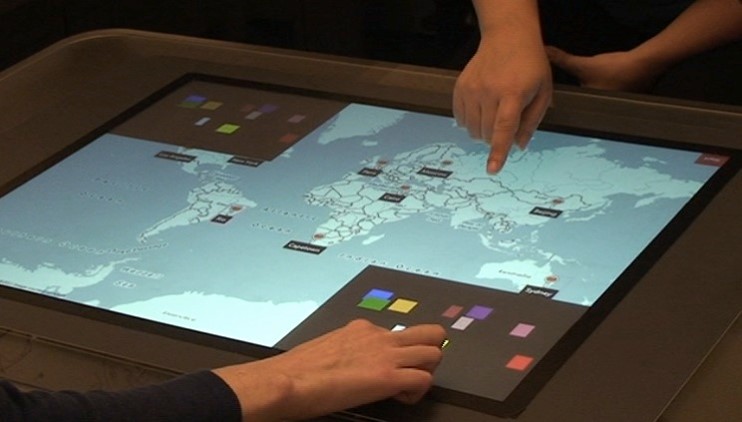
The Visualization on Touch Enabled Platforms workshop was part of the Microsoft Research Faculty Summit 2016.
Infographic Designer
Infographic visualizations are getting increasingly popular, and have been widely adopted in the real world. As research reveals, they can improve the effectiveness of visualizations by making data quickly understood and easily remembered. However, current data visualization…
Neil Harbisson Living Cyborg
Neil Harbisson is an avant-garde artist and cyborg activist based in New York. He is best known for being the first person in the world with an antenna implanted in his skull and for being…
Faculty Summit 2016 – Personalized Computing with Interconnected Wearables
Today’s wearable devices are rapidly shrinking in size. The next frontier of personalized computing is the interaction of these wearables with other proximal devices. Future interconnected wearables will thus exchange information with other ambient devices,…
Visiting Artist Speaker Series: Neil Harbisson and Moon Ribas
Neil Harbisson is an avant-garde artist and cyborg activist based in New York. He is best known for being the first person in the world with an antenna implanted in his skull and for being…
Efficient and Precise Interactive Hand Tracking through Joint, Continuous Optimization of Pose and Correspondences
Fully articulated hand tracking promises to enable fundamentally new interactions with virtual and augmented worlds, but the limited accuracy and efficiency of current systems has prevented widespread adoption. Today’s dominant paradigm uses machine learning for…