Microsoft at NSDI 2026: Advances in large-scale networked systems
Microsoft researchers share advances in building and operating large-scale distributed systems, spanning datacenters, networking, and the growing intersection with AI during NSDI ’26.
Safe agents don’t guarantee a safe ecosystem of interconnected agents. Microsoft Research examines what breaks when AI agents interact and why network-level risks require new approaches.
Deploying large language models (LLMs) in real-world, high-stakes settings is harder than it should be. In high-stakes settings like law, medicine, and cloud incident response, performance and reliability can quickly break down because adapting models to domain-specific requirements is a slow and manual process that…
For the past five years, the New Future of Work report has captured how work is changing. This year, the shift feels especially sharp. Previous editions have focused on technology’s role in increasing productivity by automating tasks, accelerating communication, and expanding access to information, as…
AI benchmarks report how large language models (LLMs) perform on specific tasks but provide little insight into their underlying capabilities that drive their performance. They do not explain failures or reliably predict outcomes on new tasks. To address this, Microsoft researchers in collaboration with Princeton…
Imagine a robot tasked with cleaning a kitchen. It needs to observe its environment, decide what to do, and adjust when things don't go as expected, for example, when the mug it was tasked to wash is already clean, or the sink is full of…
Vision-language models (VLMs) use images and text to plan robot actions, but they still struggle to decide what actions to take and where to take them. Most systems split these decisions into two steps: a VLM generates a plan in natural language, and a separate…
As AI agents transition from simple chatbots to autonomous systems capable of managing cloud incidents, navigating complex web interfaces, and executing multi-step API workflows, a new challenge has emerged: transparency. When a human makes a mistake, we can usually trace the logic. But when an…
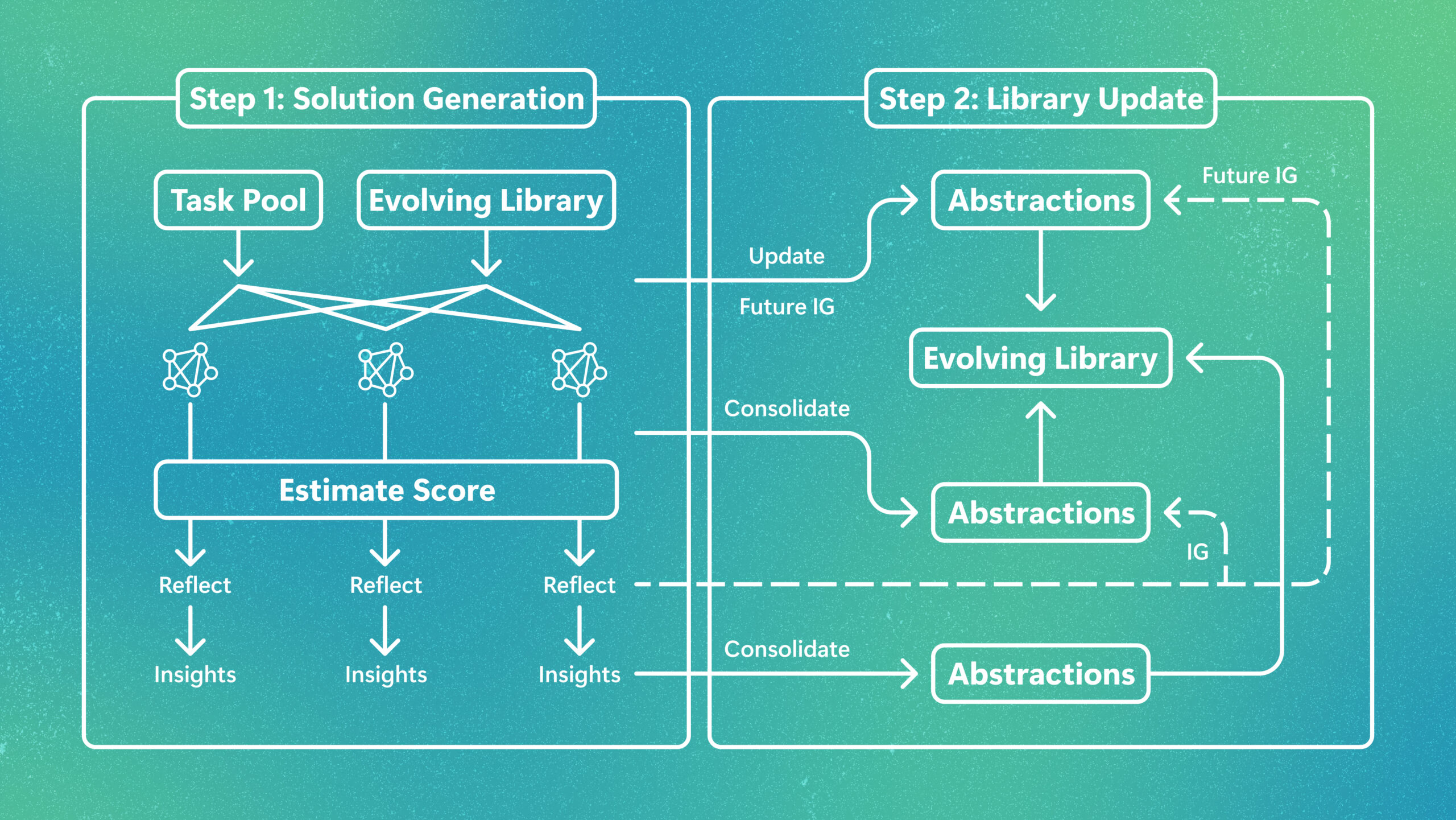
It seems counterintuitive: giving AI agents more memory can make them less effective. As interaction logs accumulate, they grow large, fill with irrelevant content, and become increasingly difficult to use. More memory means that agents must search through larger volumes of past interactions to find information…
We are pleased to announce Phi-4-reasoning-vision-15B, a 15 billion parameter open‑weight multimodal reasoning model, available through Microsoft Foundry (opens in new tab), HuggingFace (opens in new tab) and GitHub (opens in new tab). Phi-4-reasoning-vision-15B is a broadly capable model that can be used for a…
By mid-morning, a typical knowledge worker is already juggling a client report, a budget spreadsheet, a slide deck, and an email backlog, all interdependent and all demanding attention at once. For AI agents to be genuinely useful in that environment, they will need to operate…
As synthetic media grows, verifying what’s real, and the origin of content, matters more than ever. Our latest report explores media integrity and authentication methods, their limits, and practical paths toward trustworthy provenance across images, audio, and video.
Meet our community of researchers, learn about exciting research topics, and grow your network
Ongoing conversations at the cutting edge of research
Join us for a continuous exchange of ideas about research in the era of general AI