

Compelling new “realities” impacting healthcare
 The year 2020 and the global COVID-19 pandemic have accelerated technology solutions that make “virtual” the new reality. Most scenarios include using platforms like Teams or Zoom for:
- “Virtual work” to connect remote workers and customers in collaborative online sessions for business.
- “Virtual education” to connect students and teachers for distant learning and study groups.
- “Virtual health” to connect patients and caregivers for remote consultations and checkups.
While the supporting technologies have been around for years, the surge in use has skyrocketed with the need for social distancing. And although connecting with one another in physical reality will always be valuable, the advantages of virtual connections have been validated and will shape our post-pandemic lives.
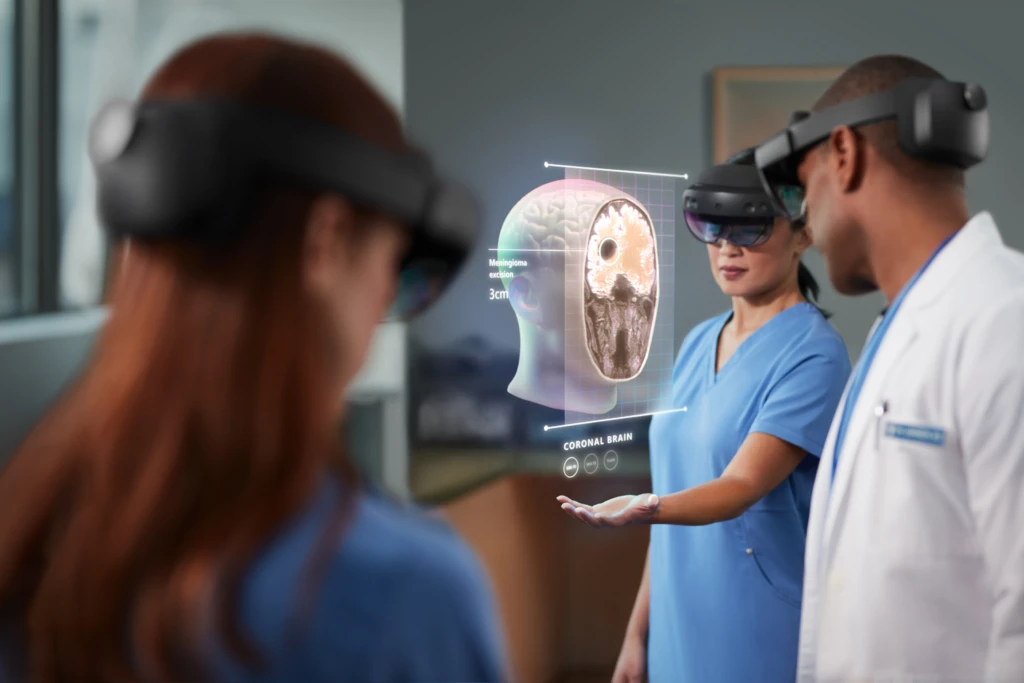
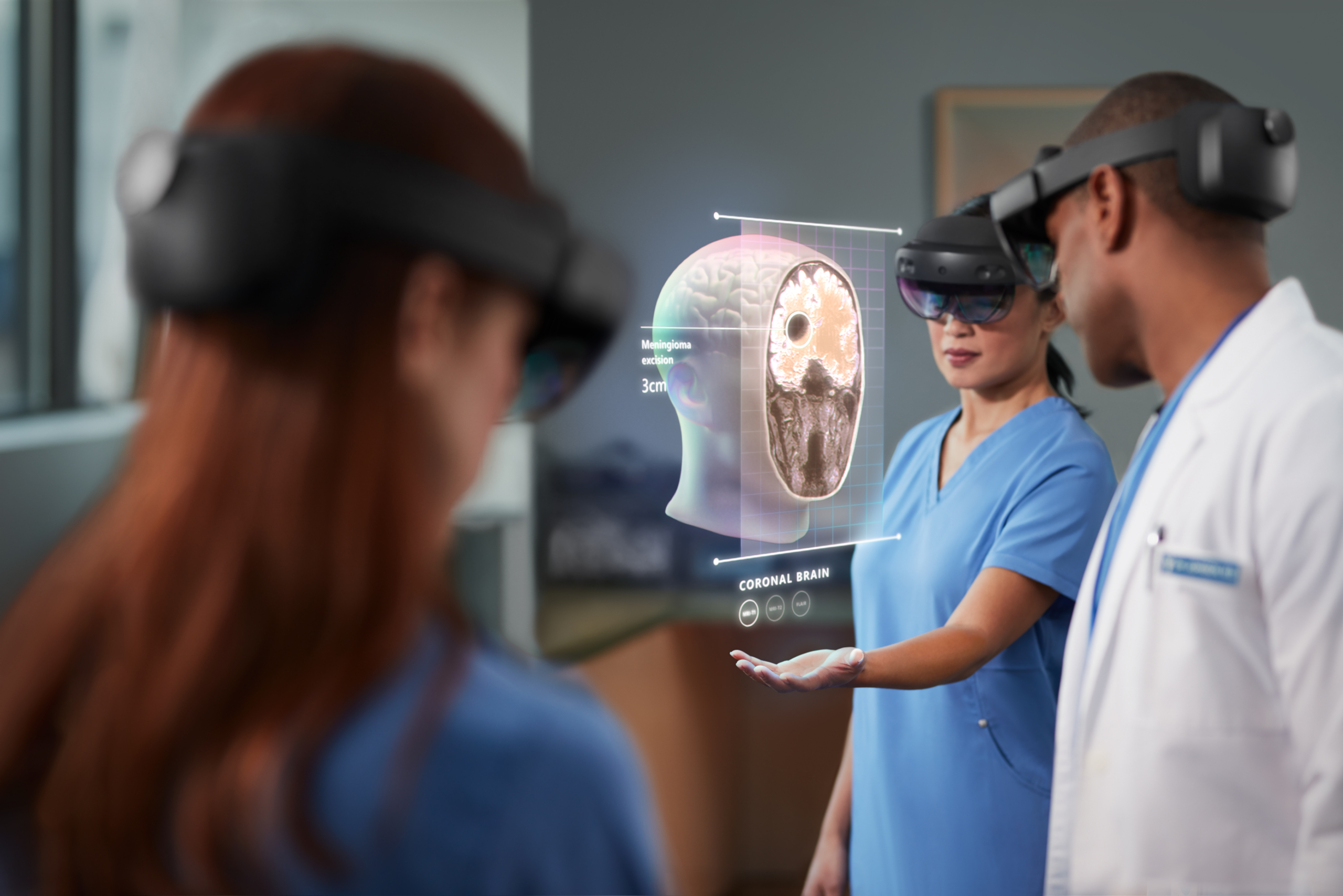
At the same time, we are witnessing an explosion in the awareness and use of technologies for two other realities: augmented reality and mixed reality. Augmented reality refers to introducing digital content into the physical world, as with special eyewear (like Microsoft HoloLens 2) that allows a doctor to view and interact with a patient’s medical record data and real-time vitals while performing an operation without having to refer to a physical note or secondary computer screen. Mixed reality goes a step further in allowing a doctor to interact with a digital representation of the patient. A simple example is a digital MRI or CT scan rendered as a 3D hologram that can be overlayed onto a patient’s body. These holograms can be shared and interacted with (rotated, zoomed, and annotated) remotely with another expert as if they were in the same place.
These capabilities take telehealth to a whole new level. Today, even as demand for clinical professionals grows, we face a shrinking number. New realities enable the availability of both enriched expertise and increased scale, boosting the quality and efficiency of health outcomes.
Want to see these realities in action? I’m excited to be hosting a special virtual session on these topics with experts in the development community as well as doctors discussing real application of these augmented- and mixed-reality capabilities in healthcare. Please join me January 27 at 11:00 AM Eastern Time for Microsoft HoloLens Industry Summit. My healthcare panel will begin at 2:15 PM and will include:
- Medivis, who created the future of surgical planning and medical education using HoloLens 2 technology. In 2020, this technology was deployed at VA Healthcare, one of the country’s largest hospital systems. Dr. Osamah Choudhry, CEO of Medivis, will host Dr. Thomas Osborne, Director of the VA National Center for Collaborative Healthcare Innovation, to speak about the VA’s experience with the technology and the exciting possibilities mixed reality holds for making healthcare safer for the nation’s veterans.
- DicomDirector – created the next generation of medical imaging software using the HoloLens to create 3D anatomic images from any CT scan. These images are used in an augmented reality environment to plan and guide surgery as well as design implantable biomedical devices. Dr. David Pearlstone, CEO of DicomDirector will host Dario DiFilippo of Edwards Life Sciences to share the results.
In addition to Microsoft HoloLens Industry Summit, I strongly encourage you check out another truly unique event. Whether you are a doctor, a patient, or an innovation leader in healthcare, the application of mixed/augmented reality in healthcare is vital. Join us February 9 for a world tour of #HolographicSurgery that visits 13 countries, 13 surgeries, 60+ speakers, and 15 roundtables in 24 hours. Discover first sessions and speakers here.