
Five key takeaways from Envision Forum: Health
Patty Obermaier | VP US Health
The healthcare landscape is being impacted at a faster rate than ever before, and Microsoft is committed to reimagining what health is in this new world. Dr. James Weinstein, Senior Vice President, Microsoft Health, calls this “a new day for innovation,” where we can address the current state of health to improve quality while reducing inequities and cost. At the 2019 Envision Health Summit, over 200 health professionals and industry experts gathered around three interconnected goals: Enable Personalized Care, Empower Care Teams, and Improve Operational Outcomes. As I reflect on the summit, there are five key takeaways that stand out from the day.
Data is key
Dr. Weinstein shared his work from Dartmouth University, where he described the criticality in having access to data to accurately and appropriately treat patients. His findings were staggeringly clear: where you live directly affects your overall health and well-being, which he refers to as the Geography of Destiny. Your zip code determines the quality and quantity of care you have access to, and also may predispose you to certain diseases. We’re spending more money than ever before, yet mortality rates are rising. Data shows that where we spend more money, we have worse outcomes. The answer isn’t money—it’s data.
Partnerships drive better outcomes
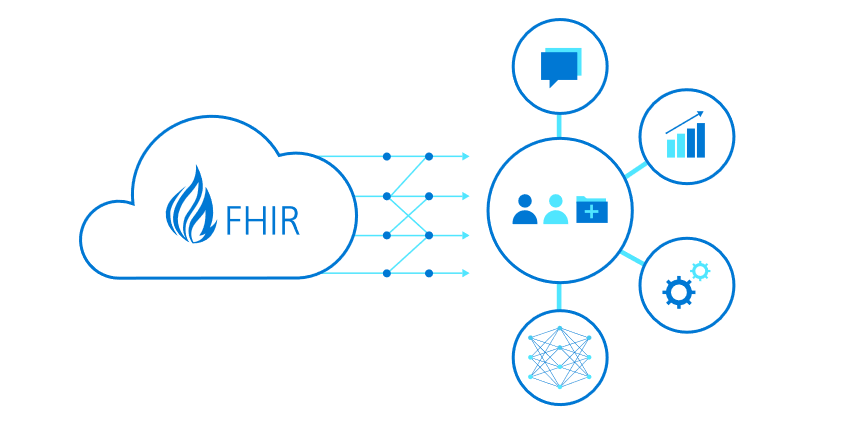
Partnership and collaboration are essential components of improving outcomes. Bryce Williams, Advisor Workforce Collaboration at Eli Lilly and Company, advised that a culture of collaboration drives innovation, empowers your workforce, and helps deliver better outcomes faster. Microsoft’s recent partnership announcements with Novartis, Nuance, and Humana highlight how organizations are innovating to deliver better health outcomes. Microsoft also recently announced that Azure API for FHIR moves to general availability, becoming the first cloud with a fully managed, first party service to ingest, persist, and manage health data in the native FHIR Format.
AI brings advantages and security is still paramount
Dr. David Rhew, Microsoft’s Chief Medical Officer, and Dr. Weinstein talked about unlocking the power of AI to provide ambient clinical intelligence to help reduce “physician burnout,” increase physicians’ time with the patient, and improve outcomes, ultimately reducing health costs. Effectively treating patients is contingent on having the right information at the right time. So how do we bring all our customers along for the journey? Vish Anantraman, MD, Chief Technology Innovation Officer at Northwell Health, advises health organizations to embed AI into existing workflows, and that the time is now.
To this day, a healthcare record is more valuable than any other personal information that we generate, and we are more committed than ever to maintaining your access and security.
Diversity and inclusion are central
D&I is a core, central component that guides what we do at Microsoft. Our partnership with the Healthcare Businesswomen’s Association (HBA) has a presence across the country, and we heard a panel of female leaders discuss the gender inequities and trends we’re seeing across the industry. The gap in women as firstline managers was specifically called out, as it impacts the entire pipeline to ever reach CEO status. As harrowing as this may sound, there’s also data suggesting that the glass ceiling is starting to crack. Jenny Lay-Flurrie, Microsoft’s Chief Accessibility Officer, discussed accessibility as a business imperative and how “access matters” no matter who you are. According to Forrester, 57% of the population can benefit from accessibility features and Jenny shared how we can transform experiences for both employees and patients in this space. As Microsoft has emphasized before, empathy helps drive innovation, and in the context of health, we have an even greater opportunity.
The future landscape of health
By the year 2020, approximately 1GB of health-related data will be created daily per person. This forces us to reckon with how we will manage that data. How do we address the increasing aging population while addressing the decline of healthcare providers? We need to ask ourselves what we can achieve with the right tools. When we think about unlocking the power of AI, ambient clinical intelligence, and driving interoperability to access the right data at the right time in a secure and compliant standard, I’m confident and optimistic about what we can accomplish together to provide better experiences, better insights, and better care.
To learn more about Microsoft in Health, visit https://cm-edgetun.pages.dev/en-us/enterprise/health .