
CERAWeek 2026: Reflections on convergence, competition, and the new Energy Frontier
Insights and outcomes from a transformative gathering
As the world navigates a critical phase for energy, the recent CERAWeek 2026 event showcased how leaders are addressing an era defined by convergence and competition—where technology and energy markets are deeply intertwined, and resilience must align with sustainability. The theme of CERAWeek 2026—“Convergence and Competition: Energy, Technology and Geopolitics”—proved to be remarkably relevant as discussions unfolded throughout the week.
It was evident that energy markets have become inseparable from digital infrastructure. AI is rapidly reshaping power demand, while supply chains remain vulnerable to geopolitical pressures. Throughout the conference, energy leaders confronted the simultaneous demands of security, affordability, and decarbonization.
Microsoft’s perspective was clear: we are entering the new Energy Frontier, where data, AI, and cloud computing serve as essential enablers for trust, resilience, and growth throughout the energy value chain.
AI emerged as a central topic in creating a more responsive and robust energy system. In this landscape of convergence and competition, energy executives are being challenged to identify disruptions earlier, pivot strategies rapidly, and make informed decisions amid global uncertainty, market fragmentation, and ongoing climate challenges. AI is no longer just a productivity booster—it’s now foundational to secure, real-time, and adaptive energy operations. The consensus at CERAWeek was that the decade’s leading organizations will be those that leverage AI to transition from static systems to intelligent, adaptive solutions.
From physical infrastructures to smart systems: Lessons from the event
This transformation was highlighted across the energy chain:
- Oil and gas companies are striving to balance investment with emissions reduction, safety, and operational resilience.
- Power and utilities are contending with surging electricity demand from electrification and data centers, while modernizing grids and preparing for extreme weather.
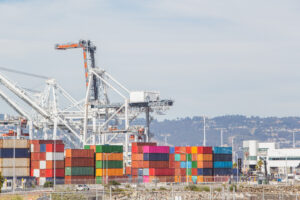
- Natural gas and liquefied natural gas (LNG) are more global and sensitive to geopolitical change than ever before.
- Mining and materials are recognized as essential to clean energy and electrification efforts.
- Policy, permitting, and regulation were frequently cited as critical to the pace of new projects.
At the heart of the discussions was AI—driving higher electricity consumption, transforming asset management, and unlocking new opportunities for analysis, prediction, and system optimization. The lines between energy and technology have all but disappeared.
Rising competition in a fragmented world: What CERAWeek revealed
The conference underscored how competition is intensifying. Geopolitical tensions, trade barriers, and supply chain disruptions are now permanent features of the marketplace. Energy leaders spoke candidly about the ongoing need to operate in environments marked by uncertainty—managing regional conflicts, cyber risks, volatile weather, and price swings.
Resilience, once seen as a defensive posture, is now a source of competitive strength. The organizations best able to anticipate disruptions, respond dynamically, and maintain secure operations in complex conditions will continue to lead. But as participants agreed, this requires more than incremental change—it calls for innovative operating models grounded in trusted data, intelligent platforms, and secure cloud infrastructures.
Microsoft at CERAWeek: Advancing on the Energy Frontier
At CERAWeek 2026, Microsoft reaffirmed its commitment to empowering energy and resource companies to seize the opportunities created by convergence and competition.
The Microsoft Agora House hosted sessions and live demonstrations illustrating how cloud, data, and AI technologies are addressing industry-wide challenges—not in isolation, but across the entire energy ecosystem.
Our collaboration with clients and partners around the world continues to focus on four key priorities:
1. Developing an AI‑ready energy workforce
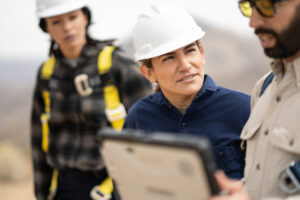
The complexity of energy systems is rising as workforce dynamics shift. Companies struggle with talent shortages, aging employees, and the urgent need for large-scale reskilling—while keeping operations safe, dependable, and efficient.
AI stands out as a catalyst for equipping the next generation workforce. With Microsoft tools, organizations can:
- Automate tasks, both routine and knowledge-based, across engineering, operations, and business functions.
- Deliver AI-powered training and reskilling tailored to technical and frontline jobs.
- Foster collaboration among IT, operational technology (OT), and field teams using secure, integrated platforms.
Our aim isn’t to replace people but to enhance expertise, streamline processes, and let teams concentrate on high-impact work—whether they’re managing intricate assets, tackling emergencies, or speeding up innovation.
2. Strengthening and optimizing operations amid volatility
Operational reliability is more important than ever in a divided world.
With increasing digitization, energy infrastructures are more exposed to cyber, physical, and geopolitical threats. Meanwhile, profitability relies on maximizing uptime, performance, and safety.
Microsoft assists energy firms to:
- Integrate IT and OT data for comprehensive operational insights.
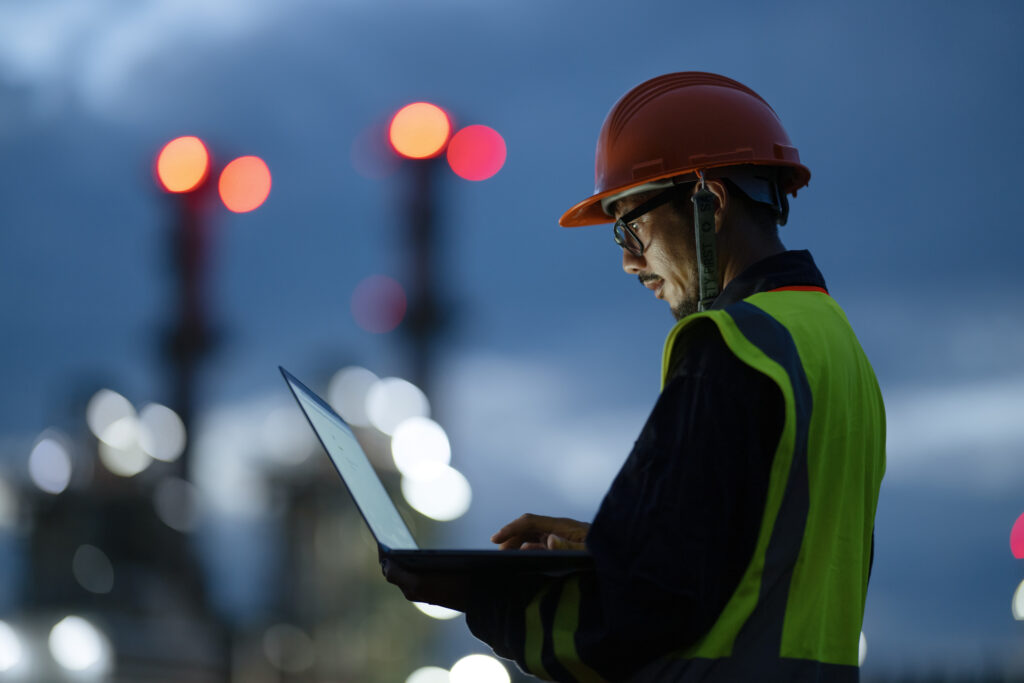
- Leverage AI and analytics for improved asset reliability and predictive maintenance.
- Bolster cybersecurity across critical and industrial infrastructures.
These advancements help leaders shift from merely reacting to events toward predicting and modeling scenarios—a necessity as disruptions grow more frequent and less predictable.
3. Driving net‑zero progress through data and AI
Net-zero commitments are now about action, not theory.
Tackling methane emissions, scaling carbon capture, updating power grids, and bringing renewables online all require accurate data, transparent tracking, and sophisticated systems operating at scale.
Microsoft enables customers to:
- Track and manage emissions with dependable, verifiable data.
- Utilize AI for methane detection, carbon accounting, and climate risk assessments.
- Modernize grid infrastructure to support electrification and renewable integration.
Success in sustainability now goes hand-in-hand with competitiveness. Organizations that transform climate ambition into actionable results will attract investment, secure approvals, and build public trust.
4. Becoming the Energy Frontier with agentic AI
A transformative development shaping the Energy Frontier is the advent of agentic AI—intelligent systems capable of reasoning, acting, and adapting in complex contexts.
At CERAWeek, we presented agentic AI solutions that:
- Streamline approval and regulatory workflows.
- Refine energy trading, logistics, and supply chain management.
- Support scenario planning involving weather, geopolitics, and changing demand.
These are not isolated fixes—they represent a new class of systems built for navigating uncertainty, helping leaders evaluate trade-offs, anticipate impacts, and accelerate decision-making confidently.
A call for leadership and collaboration
CERAWeek 2026 reaffirmed its role as a crucible for shaping the future of energy. Technological convergence is dissolving traditional industry boundaries, while competition is redefining how value is created and protected. As the event concluded, the message was clear: those who invest early in intelligent platforms, credible AI, and flexible operating models will define the coming era.
Microsoft remains committed to working closely with energy and resource organizations, building secure, sustainable, and adaptive systems that fulfill the promise of the Energy Frontier. We look forward to ongoing collaboration with industry, government, and technology leaders to continue shaping the future together—well beyond CERAWeek 2026.
Thank you to everyone who joined us at the Microsoft Agora House. The conversations, forums, and real-world stories shared have set a new pace for innovation—demonstrating how data, AI, and cloud are truly revolutionizing the global energy system.