More than 1 billion people worldwide have a disability, and 83 percent of people will experience a disability during their working age.
As AI transforms how we build and experience technology, accessibility has to be built in from the start.
Designing with and for people with disabilities isn’t optional—it’s fundamental to building technology that works for everyone and to building trust at scale. And yet today, about96% of websites are still inaccessible.
At Microsoft, we’re committed to creating accessible products and services—designed with and for the disability community—that benefit everyone.
Our “shift left” approach to software production—which involves moving quality-assurance, testing, and accessibility checks to earlier in the development lifecycle—means that implementing assistive features and tools is a high priority for Microsoft, rather than a late-stage addition.
And with the rise in importance of AI tools and products, paying close attention to accessibility standards and building these key capabilities into game-changing tech like Microsoft 365 Copilot is a crucial part of our mission here in Microsoft Digital, the company’s IT organization.
“After my accident, I became immediately reliant on accessible technology. Because I worked in tech, I could leverage accessibility features and assistive technologies to continue doing my job. It was literally a lifeline for me.”
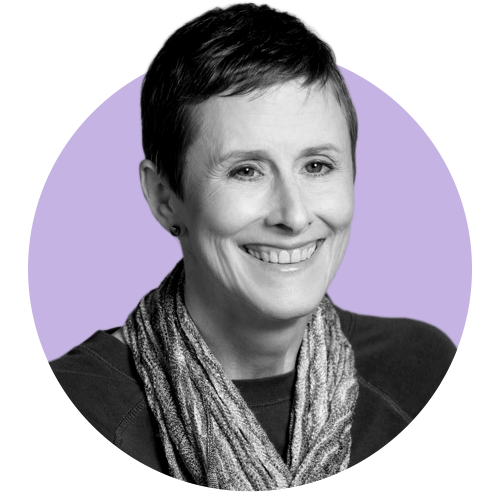
Laurie Allen, accessibility technology evangelist, Microsoft
Evangelizing for accessibility
Laurie Allen is one person who knows first-hand the importance of accessibility in enterprise software. A little more than a decade ago, she experienced a spinal cord injury and became a quadriplegic.
Today, Allen works as an accessibility technology evangelist at Microsoft. Every day, she relies on assistive digital technologies to help her be successful in her role—which involves ensuring that our software products are accessible to everyone.
“After my accident, I became immediately reliant on accessible technology,” Allen says. “Because I worked in tech, I could leverage accessibility features and assistive technologies to continue doing my job. It was literally a lifeline for me during that transitionary phase, because my job was the one thing about my life that didn’t dramatically change as a result of the accident.”
The following graphic shows how widespread disability is around the globe:
1 + B
16% of the worldwide population has a disability—more than 1 billion people
1 in 5
Identify as neurodivergent
53% of Gen Z
70% of Gen Alpha
83%
will experience a disability (including situational or temporary) while of working age
75%
Most disabilities are non-apparent—you don’t know who is affected
Shifting left for inclusivity
At Microsoft, our accessibility strategy includes such disability categories as mobility, vision, hearing, cognition, and learning—because accessibility empowers everyone.

“We view accessibility as a quality of our software, not simply a feature. Like with security and privacy, we prioritize accessibility to ensure that people can effectively perceive and operate our products and services, delivering an inclusive experience for everyone.”
Ankur Garg, accessibility program manager, Microsoft Digital
We begin with the concept of “shift left,” which in this context means incorporating accessibility principles from the project’s outset, instead of waiting until a product is already built.
This strategy mirrors our approach in other key trust domains, such as security and privacy.
“We view accessibility as a quality of our software, not simply a feature,” says Ankur Garg, an accessibility program manager in Microsoft Digital. “Like with security and privacy, we prioritize accessibility to ensure that people can effectively perceive and operate our products and services, delivering an inclusive experience for everyone.”
Here in Microsoft Digital, that manifests as treating accessibility as a core requirement validated through rigorous internal testing of AI agents and embedding standards and inclusive design early in every tool’s development life cycle. We also use internal AI tools to streamline guidance and testing before expanding those practices across the company.
Accessibility challenges in the age of AI
Technology is moving fast, especially with the advent of AI-powered tools. It’s easier than ever for companies and individuals to quickly generate and publish an app, website, or other digital product.
That means it’s also easier than ever before to create inaccessible software. It’s important to remember that much of the data that generative AI models have been trained on includes websites and apps that were built without considering accessibility guidelines.

“We want people with disabilities to be represented and see themselves in the technology we’re producing. We work with our AI models to make sure they have disability data in their training sets, so that the final product will reflect these values.”
Alli Hirt, director of accessibility engineering, Microsoft
As a result, we’ve found that many AI code-generation tools and models produce code that by default fail to meet Microsoft’s high standards for accessibility.
“We want people with disabilities to be represented and see themselves in the technology we’re producing,” says Alli Hirt, a director of accessibility engineering at Microsoft. “We work with our AI models to make sure they have disability data in their training sets, so that the final product will reflect these values.”
When we’re developing AI-driven products like Microsoft 365 Copilot, the tool must have comprehensive knowledge of different disabilities and be able to give appropriate, contextual help.
“Let’s say I tell Copilot, ‘I have a mobility disability; what software tools can I use?’” Allen says. “Copilot must recognize what a mobility disability is and identify which tools will support me. That’s the data representation we need in our AI models.”
Allen noted that sensitivity and bias are also big factors when creating these kinds of tools.
“Copilot should not respond with, ‘I’m sorry you have a disability,’” she says. “That’s the type of bias we’re working to train out of the models.”
Accessibility as a core commitment
When Satya Nadella became Microsoft CEO in 2014, he redirected the core mission of the company. The new vision was simple: To empower every person and every organization on the planet to achieve more. And accessibility is a core part of that mission.
“At Microsoft, accessibility is in our DNA. It’s who we are as a company.”
Laurie Allen, accessibility technology evangelist, Microsoft
Meeting global accessibility standards is our starting point. For example, the hub-and-spoke business model of the Accessibility Team helps ensure that accessibility is everyone’s responsibility.
The Microsoft Corporate, External, and Legal Affairs (CELA) group oversees accessibility across the company, helping products align with internationally recognized accessibility standards, such as Web Content Accessibility Guidelines (WCAG) and EN 301 549. These standards ensure that digital content, websites, and apps produced today are designed with accessibility in mind.
Understanding how products and services align to key accessibility standards and requirements is an important step in providing inclusive and accessible experiences.
“An organization’s accessibility program succeeds when it’s a priority at every level of the organization, starting with senior leadership,” Allen says. “At Microsoft, accessibility is in our DNA. It’s who we are as a company.”
Presenting content in a multimodal way
Here in Microsoft Digital, we embrace software products that provide our employees with a multimodal approach in presenting content. This means using more than one sense at the same time, like seeing, listening, reading, and speaking. This makes our products accessible to a diverse array of users, including people who learn and work in different ways. It lets our employees customize the way that works best for them.
“Seeing a visually impaired colleague demonstrate how he works—listening to a wiki being read at a speed that I could never follow—showed me exactly why accessibility is needed. It’s not just about being inclusive or compassionate; it’s a requirement for people to do their jobs.”
Eman Shaheen, principal PM lead, Microsoft Digital
For example, someone may not have a diagnosed disability, but they might be a better auditory learner than a visual learner.
This reflects what Eman Shaheen, a principal PM lead in Microsoft Digital, learned from a team member when observing how he used assistive technologies.
“Seeing a visually impaired colleague demonstrate how he works—listening to a wiki being read at a speed I couldn’t even follow—showed exactly why accessibility is needed,” Shaheen says. “It’s not just about being inclusive or compassionate; it’s a requirement for people to do their jobs.”
Here are some examples of multimodal accessibility capabilities offered by Microsoft 365 Copilot that are designed to support diverse user requirements:
Vision
- Works with screen readers
- Generates alt text for images
- Suggests accessible layouts, textual contrast, and consistent structure in documents and slides
Hearing
- Provides real-time meeting Q&A
- Produces meeting recaps across multiple languages
- Summarizes lengthy or fast-moving chats to aid comprehension
Cognitive and neurodivergent (ADHD, dyslexia, autism, executive function)
- Simplifies complex language
- Supplies task breakdowns and next-steps guidance
- Offers tone assistance to help with understanding communication nuances
Mobility
- Provides voice-driven productivity tools, such as speech to text creation
- Reduces fine‑motor effort by automating lists, tables, and drafts
- Supports meeting recordings to help compile notes and action items
Speech and communication
- Drafts and rewrites content for users needing expressive support
- Refines tone for clarity and empathy in written communication
Learning
- Summarizes long content to reduce reading burden
- Organizes notes into structured content
Mental health and fatigue
- Assists with communication when cognitive energy is low
- Provides adaptive communication assistance to help users express themselves confidently
How we demonstrate our accessibility vision
Here at Microsoft, we developed a strategic partnership with ServiceNow over the last five years. The two companies work together to accelerate digital transformation for our enterprise and government customers.
Through this partnership, we use the ServiceNow platform for internal helpdesk and ServiceDesk process automation, IT asset management, and integrated risk management.
“The biggest shift happened once ServiceNow started feeling the same operational pain we felt. That’s when they began fixing accessibility issues proactively, which changed everything.”
Sherif Mazhar, principal product manager, Microsoft Digital
As part of this process, we uncovered 1,800 accessibility bugs (including 1,200 that were rated as high severity) in the platform—in our first assessment. By contrast, our most recent review found just 24 accessibility-related issues.
“The biggest shift happened once ServiceNow started feeling the same operational pain we felt,” says Sherif Mazhar, a principal product manager in Microsoft Digital, who oversees the company’s relationship with ServiceNow. “That’s when they began fixing accessibility issues proactively, which changed everything.”
The next major step for us is ensuring our ServiceNow platform updates aligns to WCAG 2.2 accessibility standards which will require reworking older versions of our products. However, doing this work helps us maintain momentum toward a world of more inclusive enterprise software in all lines of business and for all Microsoft customers.
What’s next in accessibility
Digital accessibility work is never done.
As new software and hardware are introduced, user needs and accessibility standards change and grow. At Microsoft, we are committed to making accessibility easier for everyone.
“Right now, we’re making sure every AI agent across Microsoft is tested with assistive technologies—like screen readers and keyboard navigation—to guarantee that the outputs are accessible and compliant,” Garg says.
This “shift left” mentality at Microsoft is ultimately about putting people first. It means that no one should have to wait for a late fix to be able to do their work, or simply to belong.
By embedding accessibility standards into product planning, instead of tacking it on as an afterthought just before (or even after) product launch, we’re helping ensure that these digital experiences will include everyone from day one.
“We may compete on products, especially in AI, but accessibility is a shared mission,” Allen says. “When the industry collaborates on inclusive technology, everyone wins.”

Key takeaways
Here are some tips to keep in mind as you consider your own accessibility strategy in a world of increasingly AI-driven technology:
- Start with leadership. Championing accessibility from the C-suite signals that this is a top organizational priority.
- Raise awareness with training. Set up employee learning opportunities regarding accessibility in AI tools and encourage everyone to take part.
- Design with inclusivity in mind from day one (“shift left”). Incorporate accessibility from the beginning of the software creation process to make sure it isn’t lost in the shuffle of trying to ship a product on time.
- Think inclusively. Run usability tests with people with lived experience
- Treat accessibility as an ongoing practice. Digital accessibility work is never finished; document strategies and share your team’s learnings to keep improving iteratively as an organization.

Related links
- Learn how Microsoft is raising the bar for accessibility and building a more accessible future for all.
- Try the Ask Microsoft Accessibility AI tool.
- Read how Microsoft and ServiceNow are building more accessible and inclusive experience.
- Read the Web content accessibility guidelines.
- Explore the Microsoft Inclusive Design hub.
- See how the Indiana Pacers use Azure AI Foundry to create the first live arena captioning service.
- Go behind the scenes with a Microsoft accessibility product manager.

We’d like to hear from you!