This is the Trace Id: 1525442cd1c3aaf989e88e8fed0eccdd
5/21/2026

Clinique du Millénaire: Less admin, more time for care with Microsoft Dragon Copilot

Neurologists must listen, assess, and document simultaneously, causing interruptions, missed details, and reduced focus on the patient during consultations.

Microsoft Dragon Copilot captures consultations and generates structured clinical notes, reducing documentation burden and helping physicians stay focused on the patient.

Consultations are more fluid, notes are more complete, and physicians save time while reducing cognitive load, allowing greater focus, presence, and continuity of care.

Clinique du Millenaire

In neurology, everything starts with the patient’s story

In a neurology consultation, clinical time is not limited to the physical exam. It often begins with something essential: understanding the patient’s story.

The physician needs to review medical history, current treatments, symptoms, how they have evolved, when and how they appeared, and sometimes information shared by family members or caregivers. In neurology, listening is already a clinical act. The patient’s narrative, the timeline of symptoms, and the nuances in their experience can all shape clinical understanding.

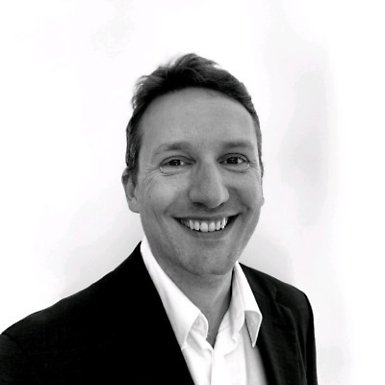
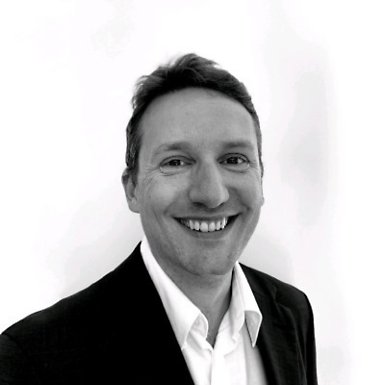
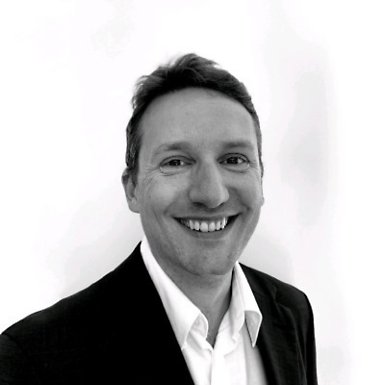
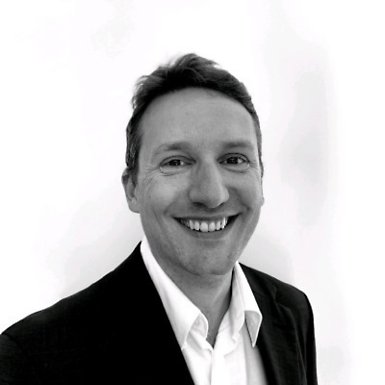
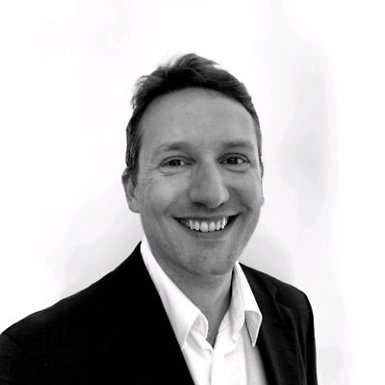
Dr. Nicolas Landragin, neurologist at Clinique du Millénaire and in private practice in Montpellier, sees this every day: when a patient arrives for a consultation, the physician often has limited information to start with.

“In neurology, the patient’s story is central, but it requires constant attention,” says Dr. Nicolas Landragin.

Clinical documentation: Invisible time, central work

Without ambient AI, the physician has to listen, ask questions, analyze, take notes, and already start structuring the future clinical note, all at the same time.

“Each time, we have to take notes and turn back to the keyboard, which constantly interrupts the consultation. And we often miss information too, because we simply don’t have time to write everything down,” explains Dr. Landragin.

This goes beyond administrative time. It touches the core of the consultation: the physician’s ability to remain fully present with the patient, without being pulled toward the screen or the need to document everything in real time.

“This is one of the major blind spots in healthcare systems: beyond the shortage of physicians, there is also a shortage of clinical time. Too much of that time is captured by documentation and administrative work, when it could be dedicated to caring for patients,” continues Dr. Nicolas Landragin.

Dragon Copilot, the clinical AI assistant

For nearly two years, Dr. Nicolas Landragin has been testing ambient AI solutions to help generate his clinical notes. That experience allowed him to compare use cases, results, and the real impact of these tools in his daily practice.

Today, he uses Microsoft Dragon Copilot full time.

“I’ve been testing ambient AI solutions to generate clinical notes for nearly two years. Now, I’ve moved full time to Dragon Copilot.”

Microsoft Dragon Copilot is a clinical AI assistant that helps clinicians simplify documentation, find information more easily, and automate certain tasks. It enables clinicians to focus on what matters most: caring for patients.

For documentation, Dragon Copilot captures the conversation between the physician, the patient, and, when relevant, family members or caregivers present during the consultation. It then generates a structured summary that the physician can review, adapt, and validate.

The goal is not to replace clinical reasoning. Dragon Copilot does not replace the physician; it protects the physician’s attention. By handling part of the documentation process, it frees the physician from the constant trade-off between listening, analyzing, and writing.

“Dragon Copilot allows me to be more present, maintain the human connection, and keep my eyes on the patient so I can listen more closely,” explains Dr. Landragin.

In the consultation, this changes the dynamic immediately. The physician can maintain eye contact, let the patient speak, and follow the clinical thread without being constantly interrupted by notetaking.

A more seamless consultation and human consultation

With Dragon Copilot, the consultation becomes more natural. The patient can speak more freely, the physician can follow the clinical thread, and documentation is built in the background without disrupting the flow of the conversation.

For Dr. Landragin, this is one of Dragon Copilot’s most visible benefits.

“The time I no longer spend typing or reconstructing the clinical note, I reinvest directly in the relationship with the patient,” says Dr. Landragin.

Ambient AI makes the consultation feel more natural because the physician no longer has to choose between listening and writing. It helps preserve the continuity of the exchange, reduce interruptions, and maintain a more direct relationship with the patient.

Dr. Nicolas Landragin, Neurologist, Clinique du Millénaire

“This is one of the major blind spots in healthcare systems: beyond the shortage of physicians, there is also a shortage of clinical time. Too much of that time is captured by documentation and administrative work, when it could be dedicated to caring for patients.”

Dr. Nicolas Landragin, Neurologist, Clinique du Millénaire

Refocusing on what matters most: The patient

In a consultation of around 30 minutes, notetaking and writing the clinical note typically take between five and ten minutes. With Dragon Copilot, much of that time is recovered.

“It saves time in every consultation. In a consultation of around 30 minutes, the notetaking and clinical documentation usually take between five and ten minutes. The time we save with the tool, we spend with the patient,” says Dr. Landragin.

This is one of the strongest messages from his testimony. AI in healthcare should not be assessed only through the lens of productivity. Its real value also lies in what it helps rebuild within the consultation: more listening, more explanation, more attention, fewer interruptions, and less cognitive load.

The time saved does not disappear into the organization. It goes back to the patient.

Dr. Nicolas Landragin, Neurologist, Clinique du Millénaire

“It saves time in every consultation. In a consultation of around 30 minutes, the notetaking and clinical documentation usually take between five and ten minutes. The time we save with the tool, we spend with the patient.”

Dr. Nicolas Landragin, Neurologist, Clinique du Millénaire

A clinical note that better reflects the consultation

One of Dragon Copilot’s major contributions is the quality of the documentation. The clinical note is not only faster to produce. It becomes a better reflection of the consultation itself.

Dr. Landragin explains that the tool helps preserve information that could otherwise have been missed or insufficiently captured.

In neurology, that level of completeness is especially important. The patient’s clinical history, the timeline of symptoms, treatments, information shared by family members or caregivers, and observations made during the exam can all have clinical value.

Dragon Copilot acts as a support for the clinical memory of the consultation. It helps retain relevant information without interrupting the dialogue.

Dr. Landragin also points to the quality of the generated clinical note: “The clinical note better reflects the richness of the consultation. It includes elements I would not necessarily have had time to capture myself.”

This is essential. The clinical note is not just an administrative document. It is an extension of the consultation. It structures follow-up, supports coordination, and contributes to continuity of care.

More explicit clinical communication, to the patient’s benefit

Using Dragon Copilot also changes the way the physician verbalizes certain parts of the consultation. To ensure the clinical note accurately reflects the exam, Dr. Landragin says more of what he observes out loud.

This benefits the medical document, but also the patient.

“I verbalize more of what I observe. For the clinical note, that is useful. For the patient, it is even more valuable, because they better understand what I am looking at and what I am analyzing,” explains Dr. Landragin.

The tool encourages the physician to make clinical reasoning more explicit. By saying more of what he observes during the exam, the physician makes part of that reasoning more visible to the patient. Dragon Copilot then becomes an indirect lever for medical education.

This matters: Dragon Copilot does not only document what is said. It encourages a more explicit, more educational, and more transparent consultation.

The patient better understands what the physician observes. The clinical exam becomes more shared. And the clinical note gains precision, because it more faithfully reflects what was observed and explained during the consultation.

Better documentation to support medical coordination

Once the consultation is over, the physician’s work continues. A complete, structured clinical note must be produced—one that can be used by the patient, the primary care physician, and other healthcare professionals involved in the care pathway.

Dr. Landragin describes this step as essential. 

“The clinical note is also a coordination tool. The clearer and more complete it is, the more it helps the other professionals following the patient,” says Dr. Landragin.

Better documentation also serves referring physicians and care teams. The generated clinical note benefits not only the physician and the patient; it also supports continuity of care by giving the primary care physician and specialists a clear, structured, and complete view of the consultation.

In medical practice, where a patient is often followed by several professionals, documentation quality becomes critical. It helps transmit information more effectively, avoid loss of context, and make exchanges between care teams more fluid.

Dr. Nicolas Landragin, Neurologist, Clinique du Millénaire

“The clinical note better reflects the richness of the consultation. It includes elements I would not necessarily have had time to capture myself.”

Dr. Nicolas Landragin, Neurologist, Clinique du Millénaire

Less cognitive load

Beyond each individual consultation, Dragon Copilot’s impact is also felt across the day.

Dr. Landragin may see 15 to 20 patients a day, with consultations sometimes running back-to-back for five or six hours. In that context, every additional documentation task adds to the physician’s cognitive load.

Dragon Copilot helps reduce the mental burden associated with documentation and administrative work. In a day filled with consecutive consultations, fatigue does not come only from the clinical relationship. It also comes from the constant effort to synthesize, remember, and write. By easing that burden, Dragon Copilot helps the physician remain more available through the end of the day.

“At the end of the day, what changes is not only the time saved. It is the mental energy I have not spent reconstructing each clinical note,” says Dr. Landragin.

Less fatigue means more availability, more focus, and a stronger ability to maintain attention throughout the day.

Dr. Nicolas Landragin, Neurologist, Clinique du Millénaire

“At the end of the day, what changes is not only the time saved. It is the mental energy I have not spent reconstructing each clinical note.”

Dr. Nicolas Landragin, Neurologist, Clinique du Millénaire

Useful AI fades into the care experience

One of Dragon Copilot’s strengths is that it does not add another layer of complexity to the consultation. The tool is useful because it fades into the medical exchange: it captures, structures, and returns information without pulling the physician’s attention toward the technology.

AI becomes useful when it fades into care. It does not take the place of the clinical relationship. It removes part of what used to interrupt it.

“Useful AI for physicians is AI you barely notice during the consultation, but whose impact you see immediately afterward,” explains Dr. Landragin.

This integration translates into a smoother consultation, more complete documentation, and reduced cognitive load. The technology does not become the center of the consultation. It helps the physician remain centered on the patient.

Restoring humanity where administrative work had reduced it

Dr. Nicolas Landragin’s testimony points to a simple reality: AI creates value when it fits into the clinical workflow without adding complexity.

In his neurology practice, Microsoft Dragon Copilot helps simplify documentation, produce more complete clinical notes, reduce interruptions during the consultation, and preserve the quality of the exchange with the patient.

The paradox is powerful: technology can restore humanity where administrative work had reduced it. Not because it replaces the conversation, but because it removes part of what used to interrupt it.

“What I expect from AI like Dragon is not that it practices medicine for me. It is that it helps me do my job as a physician even better.”

At its core, the role of AI in healthcare is to reduce the administrative burden and give more time back to care.

That is what this testimony shows: useful technology does not pull the physician away from the patient. It helps the physician remain fully present with them.

Dr. Nicolas Landragin, Neurologist, Clinique du Millénaire

“Useful AI for physicians is AI you barely notice during the consultation, but whose impact you see immediately afterward.”

Dr. Nicolas Landragin, Neurologist, Clinique du Millénaire

Take the next step

Fuel innovation with Microsoft

Explore more customer stories

Find out how customers are achieving more with Microsoft products and solutions.
A man wearing headphones and smiling.

Talk to an expert about custom solutions

Let us help you create customized solutions and achieve your unique business goals.
Three people in a meeting room.

Transform work with Microsoft AI

Bring intelligence into the flow of work and help your organization achieve its goals with secure, scalable AI solutions.

Follow Microsoft