This is the Trace Id: 59dab477da07d3bba17c074b5fcd6f1c
2/6/2026

American Hospital of Paris: Bringing the focus back to the patient with Microsoft Dragon Copilot

The American Hospital of Paris is driving a multi‑year digital and AI transformation to improve patient and clinician experience. Documentation workload and cognitive load limited physicians’ ability to fully focus on patient interactions.

The hospital selected Microsoft Dragon Copilot and joined a private preview to co‑design the solution with clinicians. Combining Dragon Medical One and ambient AI, it automates clinical documentation and reduces administrative burden.

Dragon Copilot reduced documentation time and cognitive load, enabling more natural, patient‑focused consultations. Physicians finalize high‑quality visit notes faster, while patients benefit from clearer documentation and improved follow‑up care.

American Hospital of Paris

A reference hospital driving healthcare innovation

A recognized non-profit public-benefit institution, the American Hospital of Paris is a multidisciplinary Franco-American hospital known for combining medical innovation, leading-edge technology, and a deeply human approach to deliver personalized care to French and international patients. 

Its ambition is clear: bring together the best of French medicine and the best of American medicine. To support that vision, the American Hospital of Paris launched a multi-year digital and AI transformation strategy anchored in two core pillars.

The first pillar focuses on the patient experience, with the creation of a modern services platform designed to support patients throughout their care journey and enable them to take an active role in their care. Built to align with the hospital’s operating model, it provides visibility into next steps, simplifies access to information and administrative processes, and helps establish a more continuous relationship between patients and the organization.

The second pillar focuses on the clinician experience, with “AHP Med”, a services platform designed as a true digital workspace—built mobile-first. 

Accessible directly from a smartphone, it supports a wide range of everyday needs, from care scheduling and visit documentation to routine tasks such as time-off requests, as well as secure instant-messaging-style communication that meets healthcare data hosting and security requirements (HDS).

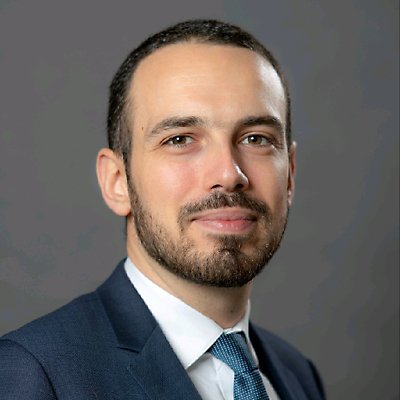
Félix Mamoudy, Director of Digital Transformation and Patient Pathways, summarizes this priority, “The goal isn’t to stack features, it’s to deliver a simple, mobile medical services platform that supports physicians across their day-to-day practice. AHP Med should save time, reduce cognitive load, and help clinicians focus on what matters most: patient care.”

In this context, the hospital selected Microsoft Dragon Copilot to support its clinician experience priorities.

Shaping Dragon Copilot for France, grounded in clinical practice

Guided by the belief that “technology will never replace humans in caring for humans, but AI can augment them,” Félix Mamoudy engaged clinical teams in a private preview program for Dragon Copilot. 

Through structured feedback and real-world testing, this phase helped refine and adapt the experience to the realities of the French healthcare system.

The objective was concrete: assess impact during patient visits, on clinical documentation, time savings, and the quality of the patient-clinician interaction.

Combining the proven speech recognition capabilities of Dragon Medical One (DMO) with ambient AI from DAX Copilot, Dragon Copilot is a clinical AI assistant that supports physicians across specialties by streamlining clinical documentation through automated, customizable note generation, surfacing information, and automating tasks.

“Dragon Copilot is a practical step toward an AI-augmented physician: more listening, less cognitive load, and better documentation quality,” Mamoudy adds.

Félix Mamoudy, Director of Digital Transformation and Patient Pathways, American Hospital of Paris

“Dragon Copilot is a practical step toward an AI-augmented physician: more listening, less cognitive load, and better documentation quality.”

Félix Mamoudy, Director of Digital Transformation and Patient Pathways, American Hospital of Paris

Focusing on what matters most: Caring for the patient

Before adopting Dragon Copilot, physicians at the American Hospital of Paris were already equipped with Dragon Medical One (DMO) and used it routinely at the end of each visit to dictate clinical documentation, including the visit note.

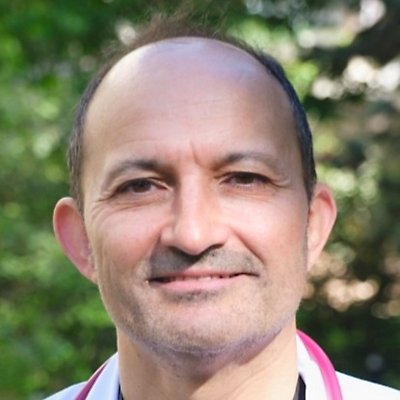
Dr. Riadh Caïd-Essebsi, Head of the Cardiology Department, describes moving from skepticism to conviction, “At first, I was hesitant, I thought Dragon Copilot would disrupt my visit. But I was blown away. I repeat, blown away. It really left a deep impression on me.”

With Dragon Copilot, documentation happens differently. Once the visit is over, a note is automatically generated, which the physician can personalize and then validate.

But the most visible impact happens during the interaction itself. By reducing the documentation burden, the tool helps physicians refocus the visit on the patient. “I no longer look at my computer; I focus on the patient. Our conversation is now much more constructive, more natural, and more direct,” Dr. Caïd-Essebsi confirms.

Dr. Riadh Caïd-Essebsi, Head of the Cardiology Department, American Hospital of Paris

“At first, I was hesitant, I thought Dragon Copilot would disrupt my visit. But I was blown away. I repeat, blown away. It really left a deep impression on me.”

Dr. Riadh Caïd-Essebsi, Head of the Cardiology Department, American Hospital of Paris

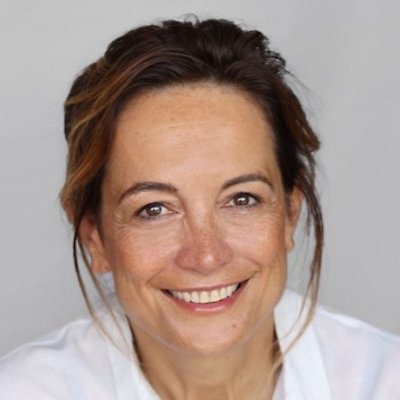
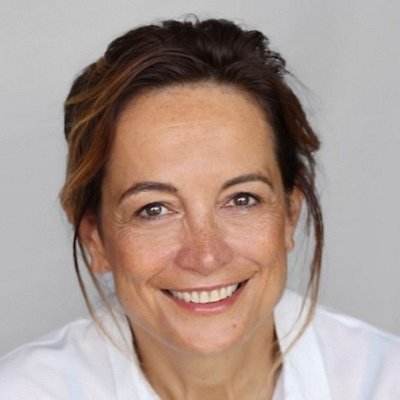
Professor Mahasti Saghatchian, Head of the Oncology Department, also highlights the change, “Dragon Copilot has even improved the quality of my visits.” 

And day to day, cognitive load decreases. “You feel more at ease with patients, less stressed, less focused on the clock. After a 30-minute oncology visit, I’m not rushing to end it— because I know that once the patient leaves, my note is done,” adds Professor Saghatchian.

Professor Mahasti Saghatchian, Head of the Oncology Department, American Hospital of Paris

“You feel more at ease with patients, less stressed, less focused on the clock. After a 30-minute oncology visit, I’m not rushing to end it—because I know that once the patient leaves, my note is done.”

Professor Mahasti Saghatchian, Head of the Oncology Department, American Hospital of Paris

Streamlined documentation—in less time, with less cognitive load

This documentation impact ties back to a key point: by reducing the cognitive load associated with the visit note, physicians no longer have to keep the documentation “in mind” during the visit. They save time on documentation while improving the quality and completeness of the final note.

Dr. Caïd-Essebsi confirms, “I can finalize my cardiology note in 90 seconds, whereas before, it might have taken me 8 to 9 minutes.” He adds, “What’s really remarkable is that nothing is missing from the final note.”

At the same time, physicians can tailor their workflow so the note reflects the information they want captured. Professor Saghatchian, highlights this effect. “To make sure the information appears in the note the way I want it, I now express my clinical thinking more explicitly, for example, saying that the patient’s physical exam is normal, or reading exam results out loud. I’m saying more to patients, so the visit is richer for them as well.” She adds, “And today, all of that is clearly captured in the note.”

Dr. Riadh Caïd-Essebsi, Head of the Cardiology Department, American Hospital of Paris

“I can finalize my cardiology note in 90 seconds, whereas before, it might have taken me 8 to 9 minutes.”

Dr. Riadh Caïd-Essebsi, Head of the Cardiology Department, American Hospital of Paris

Putting time back where it belongs, with patients

Beyond time savings reported by clinicians, the impact is also felt by patients. A higher-quality visit note, clearer, more complete, and available sooner, becomes a tangible extension of the visit and strengthens confidence in follow-up care.

Dr. Caïd-Essebsi sees it day to day, “Patients leave with a smile. They’re blown away by the quality of the note. And my assistant is also happy, because it streamlines communication with patients and with referring physicians.”

Dr. Riadh Caïd-Essebsi, Head of the Cardiology Department, American Hospital of Paris

“Patients leave with a smile. They’re blown away by the quality of the note. And my assistant is also happy, because it streamlines communication with patients and with referring physicians.”

Dr. Riadh Caïd-Essebsi, Head of the Cardiology Department, American Hospital of Paris

In a culture of excellence where service quality matters as much as clinical accuracy, technology helps reinforce what drives care value: attention, listening, and time spent with the patient. As Professor Saghatchian puts it, “Over time, quality will increasingly be measured by the humanity we bring. And the more time we have for that, the better our medicine will be.”

Professor Mahasti Saghatchian, Head of the Oncology Department, American Hospital of Paris

“Over time, quality will increasingly be measured by the humanity we bring. And the more time we have for that, the better our medicine will be.”

Professor Mahasti Saghatchian, Head of the Oncology Department, American Hospital of Paris

Discover more details

SERVICES AND SUPPORT
Take the next step

Fuel innovation with Microsoft

Explore more customer stories

Find out how customers are achieving more with Microsoft products and solutions.
A man wearing headphones and smiling.

Talk to an expert about custom solutions

Let us help you create customized solutions and achieve your unique business goals.
Three people in a meeting room.

Transform work with Microsoft AI

Bring intelligence into the flow of work and help your organization achieve its goals with secure, scalable AI solutions.

Follow Microsoft