
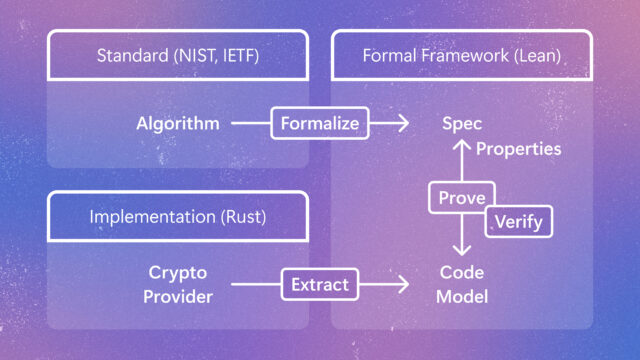

Security, privacy, & cryptography
Developing technologies that protect data, preserve privacy, and build trustworthy computing systems.



Project
Post-quantum Cryptography VPN
Post-quantum Crypto and VPNs Every time you make a secure connection over the internet – to your bank, to Facebook, or nearly anywhere online – cryptography is what keeps that communication secure. Some of that…
Publication
Liberation Through Radical Decentralization
Publication
EnclaveDB – A Secure Database using SGX
Tool
KReMLin
KreMLin is a tool that extracts an F* program to readable C code. If the F* program verifies against a low-level memory model that talks about the stack and the heap; if it is first-order;…
Video
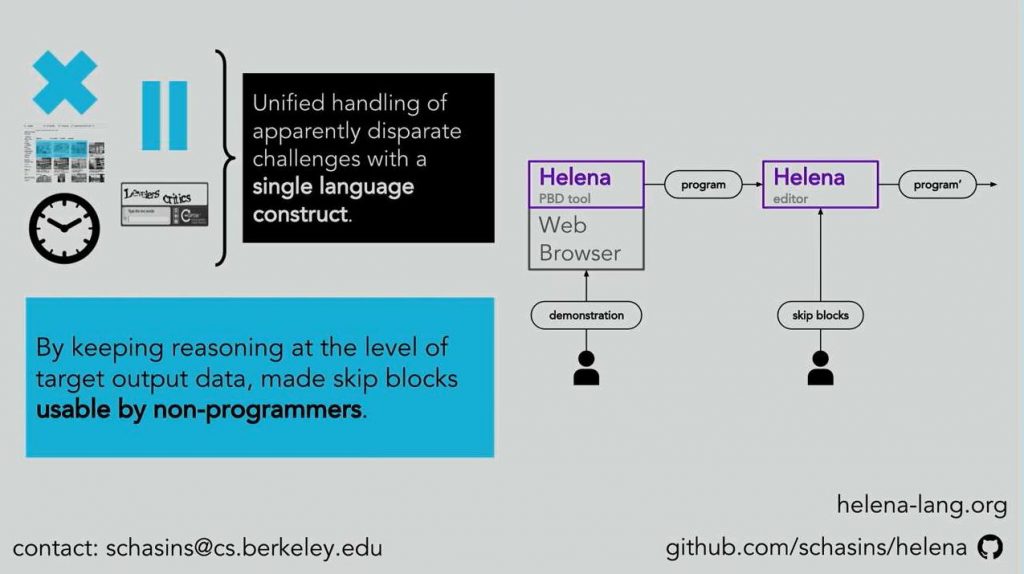
PNW PLSE Workshop: Featured Talk: Continuously Integrated Verified Cryptography
The PNW PLSE workshop provides an opportunity for programming languages and software engineering researchers throughout the Pacific Northwest to meet, interact, and share work in progress as well as recent results. The meeting on May…
Tool
Trusted Platform Module (TPM) Reference implementation – 2.0 specification
This is a Microsoft Visual Studio solution that contains reference implementation of the TPM 2.0 Specification by TCG available at https://trustedcomputinggroup.org/tpm-library-specification (opens in new tab). See the TPMCmd/tpm/include/TpmTypes.h header for the exact revision/date of the TPM…
Video
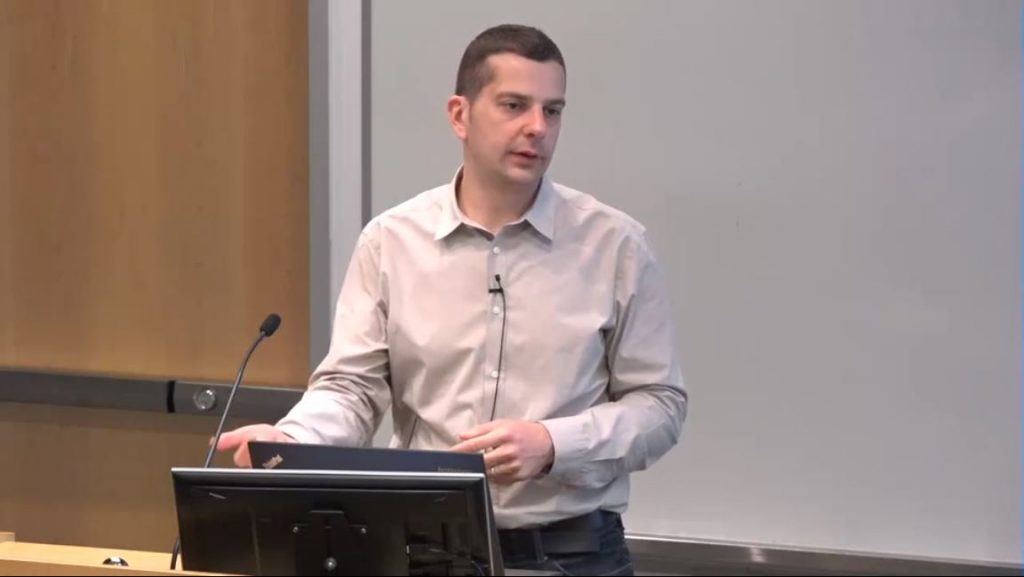
Cryptographic Program Obfuscation: Current Capabilities and Challenges
Cryptographic program obfuscation (CPO) enables the evaluation of obfuscated programs/circuits for non-encrypted inputs using cryptographic approaches based on standard (or almost standard) security assumptions. CPO is a hot topic of cryptography that has recently seen…
Project
Picnic
“Picnic” is the code name for a post-quantum digital signature algorithm, using a uses what is called a zero-knowledge proof concept.
Project
qTESLA
qTESLA is a collaboration between researchers and engineers at ISARA Corporation, Microsoft Research, Ondokuz Mayis University, Technische Universität Darmstadt, University SãoPaulo and the University of Washington, Tacoma. qTESLA is a family of efficient post-quantum digital…