Video
Touch-Sensing Input Devices
We can touch things, and our senses tell us when our hands are touching something. But most computer input devices cannot detect when the user touches or releases the device or some portion of the…

 Research

Designing technology that is more intuitive, accessible, and useful across the full range of human experiences.
We can touch things, and our senses tell us when our hands are touching something. But most computer input devices cannot detect when the user touches or releases the device or some portion of the…
Current interactive surfaces provide little or no in-formation about which fingers are touching the surface, the amount of pressure exerted, or gestures that occur when not in contact with the surface. These limitations constrain the…
Find out what it’s like to be an intern at the Microsoft Research lab in Cambridge, UK. Real interns talk about the projects they are working on, the culture of the lab and what it’s…
We explore the use of social learning — improving knowledge skills by observing peer behavior — in the domain of Web search skill acquisition, focusing specifically on co-located classroom scenarios. Through a series of interviews,…
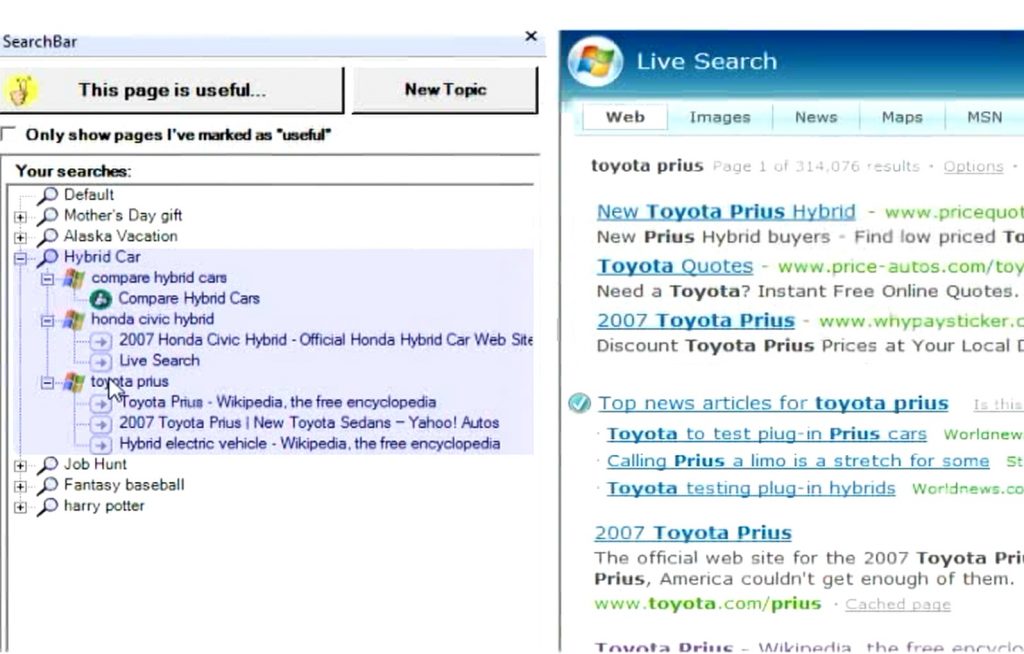
SearchBar is a system for proactively and persistently storing query histories, browsing histories, and users’ notes and ratings in an interrelated fashion.
Repetitive strain injuries and ergonomics concerns have become increasingly significant health issues as a growing number of individuals frequently use computers for long periods of time. Currently, limited software mechanisms exist for managing ergonomics; the…
We have continually evolved computing to not only be more efficient, but also more accessible, more of the time (and place), and to more people. We have progressed from batch computing with punch cards, to…
Input modalities such as speech and gesture allow users to interact with computers without holding or touching a physical device, thus enabling at-a-distance interaction. It remains an open problem, however, to incorporate haptic feedback into…