

Artificial Intelligence
Building intelligent machines that complement human reasoning and extend what people can do.



Group
Reinforcement Learning
The Reinforcement Learning research group works on theoretical foundations, algorithms, and systems for autonomous decision making. Our main research areas include exploration-exploitation trade-offs, off-policy learning, and generalization for contextual bandits, Markov decision processes, and contextual…
Project
Situated Interaction
The situated interaction research effort aims to enable computers to reason more deeply about their surroundings, and engage in fluid interaction with humans in physically situated settings. When people interact with each other, they engage…
Project
Foundations of Optimization
Optimization methods are the engine of machine learning algorithms. Examples abound, such as training neural networks with stochastic gradient descent, segmenting images with submodular optimization, or efficiently searching a game tree with bandit algorithms. We…
Project
Biomedical Natural Language Processing
The biomedical sciences are beginning to undergo a major transformation. Precision medicine has the potential to make treatments much more effective by better understanding patients, biological mechanisms, and therapeutic effects. However, current approaches only reach…
Video
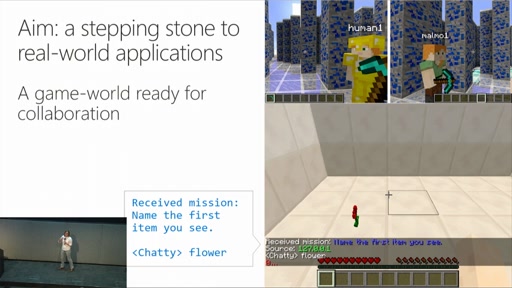
The Malmo Collaborative AI Challenge
A long-term goal of artificial intelligence research is to develop artificial assistants (AI agents) that can collaborate with and empower their users. This goal raises important questions, such as how AI agents may understand a…
Video
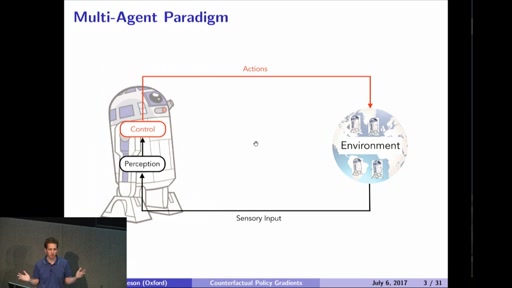
Counterfactual Multi-Agent Policy Gradients
Many real-world problems, such as network packet routing and the coordination of autonomous vehicles, are naturally modelled as cooperative multi-agent systems. In this talk, I overview some of the key challenges in developing reinforcement learning…
Microsoft Research Blog
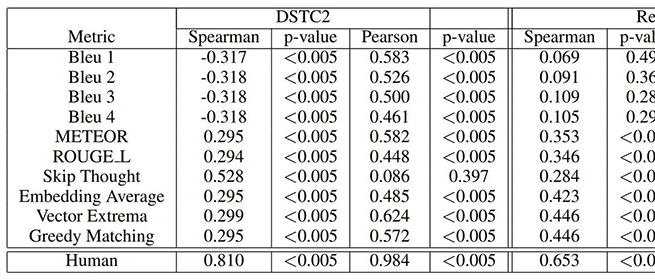
Relevance of Unsupervised Metrics in Task-Oriented Dialogue for Evaluating Natural Language Generation
The vision of the researchers at the Microsoft Research Montreal lab is to create machines that can comprehend, reason and communicate with humans. As part of this vision, our dialogue team has been doing research…
Project
Contextually Intelligent Assistants
The Contextually Intelligent Assistants project makes progress toward the type of contextual intelligence needed for next-generation assistants. It does this by improving the state-of-the-art in understanding task intent from task descriptions.
Project
Intelligible, Interpretable, and Transparent Machine Learning
The importance of intelligibility and transparency in machine learning Most real datasets have hidden biases. Being able to detect the impact of the bias in the data on the model, and then to repair the…
Video
Video Abstract: Project InnerEye – Assistive AI for Cancer Treatment
Project InnerEye is a new AI product targeted at improving the productivity of oncologists, radiologists and surgeons when working with radiological images. The project’s main focus is in the treatment of tumors and monitoring the…