
Artificial Intelligence
Building intelligent machines that complement human reasoning and extend what people can do.

Baladodiffusion
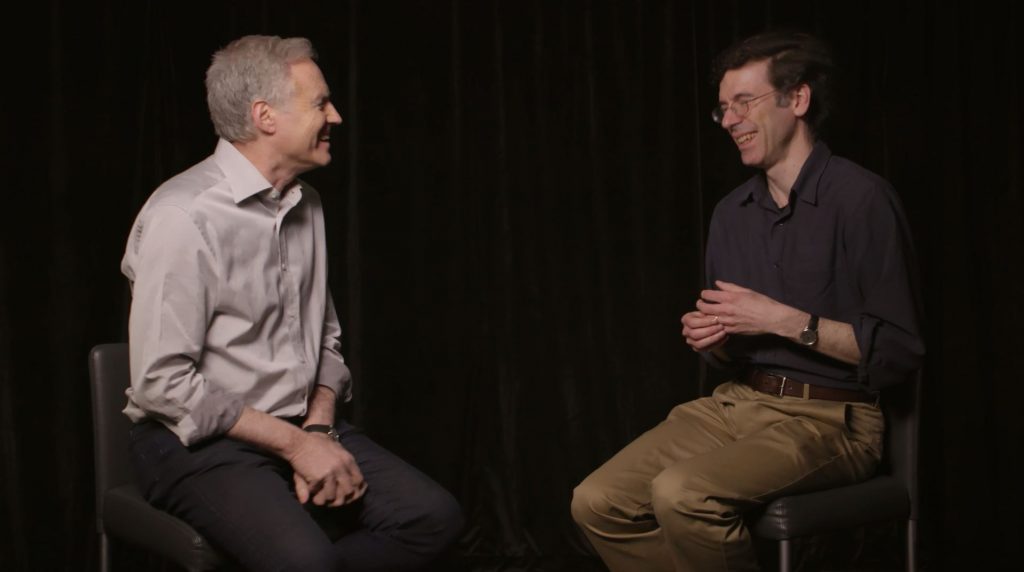
Building Literate Machines with Dr. Adam Trischler
Episode 16, March 21, 2018 – Dr. Trischler talks about his dream of making literate machines, his efforts to design meta-learning algorithms that can actually learn to learn, the importance of what he calls “few-shot…

Publication
Stacked Cross Attention for Image-Text Matching
Outil
Infer.Net
Infer.NET is a framework for running Bayesian inference in graphical models. It can also be used for probabilistic programming. Infer.NET has been used in a wide variety of domains including information retrieval, bioinformatics, epidemiology, vision,…
Vidéo
Counterfactual Fairness
Machine learning can impact people with legal or ethical consequences when it is used to automate decisions in areas such as insurance, lending, hiring, and predictive policing. In many of these scenarios, previous decisions have…
Vidéo
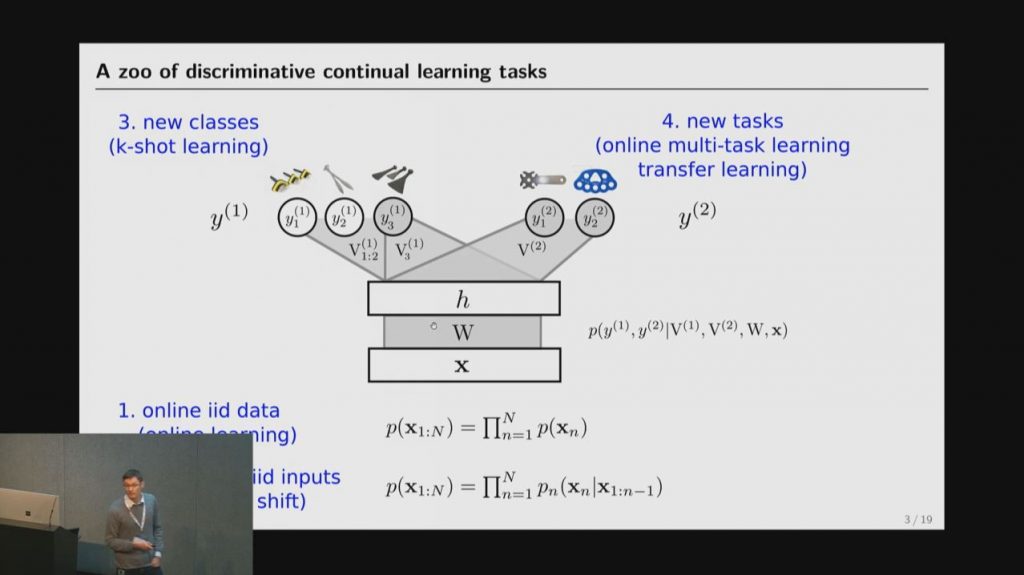
Variational Continual Learning
This talk introduces variational continual learning, a simple but general framework for continual learning that fuses online variational inference (VI) and recent advances in Monte Carlo VI for neural networks. The framework can successfully train…
Vidéo
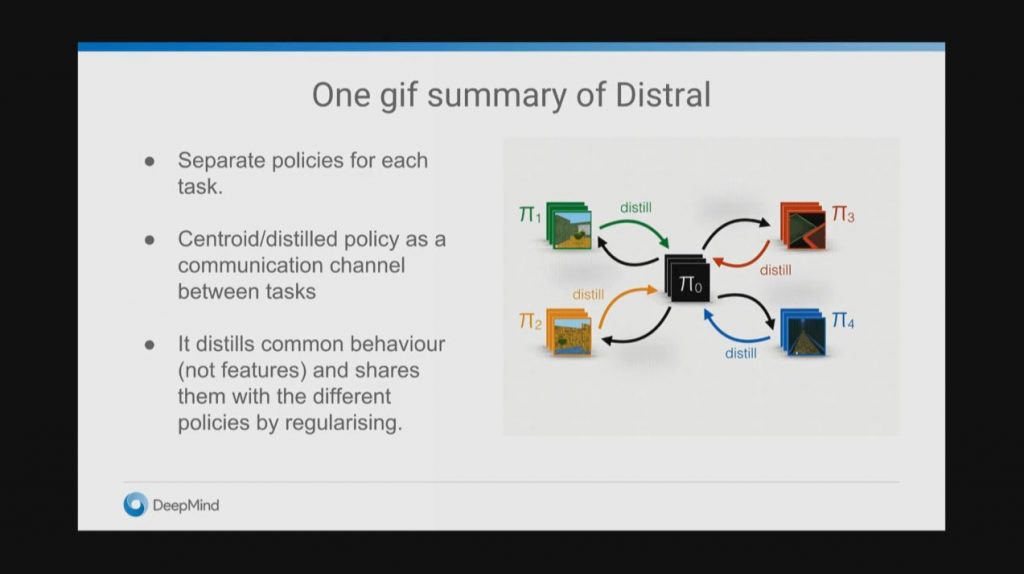
Distill and transfer learning for robust multitask RL
Most deep reinforcement learning algorithms are data inefficient in complex and rich environments, limiting their applicability to many scenarios. One direction for improving data efficiency is multitask learning with shared neural network parameters, where efficiency…
Vidéo
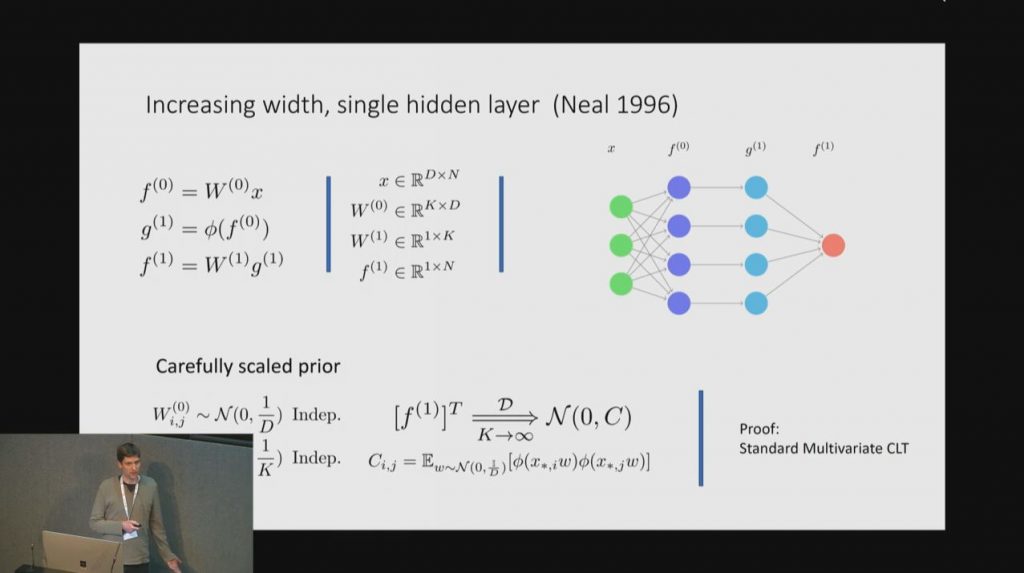
Priors for Deep Networks: Limit theorems, pitfalls, open questions
Much research in Bayesian Deep Learning is about approximating the posterior. With some notable exceptions, the choice of prior is less often considered. In this second direction, we discuss recent work on central limit theorems…
Vidéo
Active Mini-Batch Sampling using Repulsive Point Processes
The performance of stochastic gradient descent (SGD) can be improved by actively selecting mini-batches. In this work, we explore active mini-batch selection using repulsive point processes. This simultaneously introduces active bias and leads to stochastic…
Vidéo
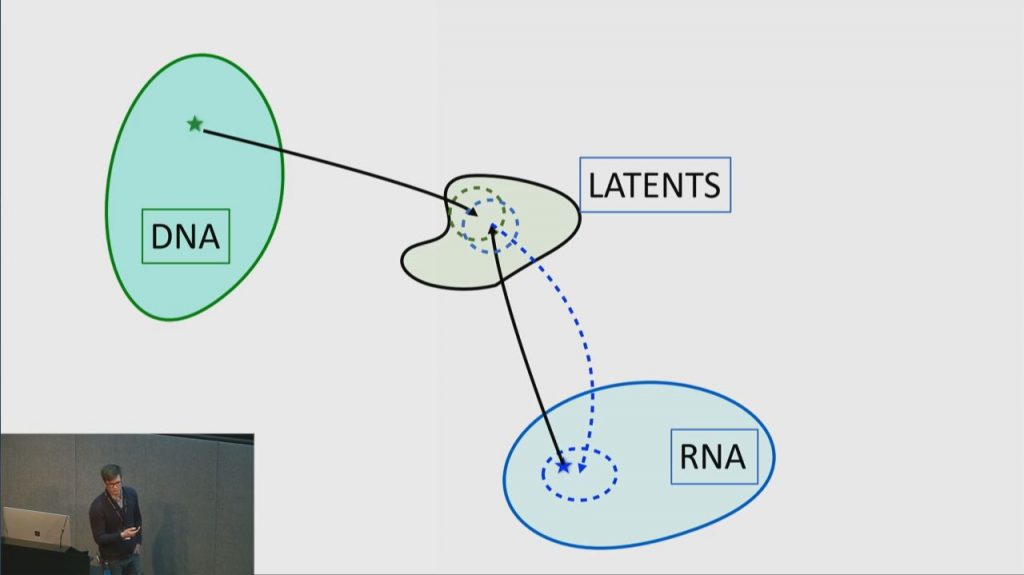
Reconciling Cancer Genotype and Phenotypes by Learning Structured Priors
Cancer is often viewed as a genetic disease because accumulation of mutations in the DNA are said to “drive” the progression of the disease. Depending on the mutations, an individual may exhibit some or many…