News Story
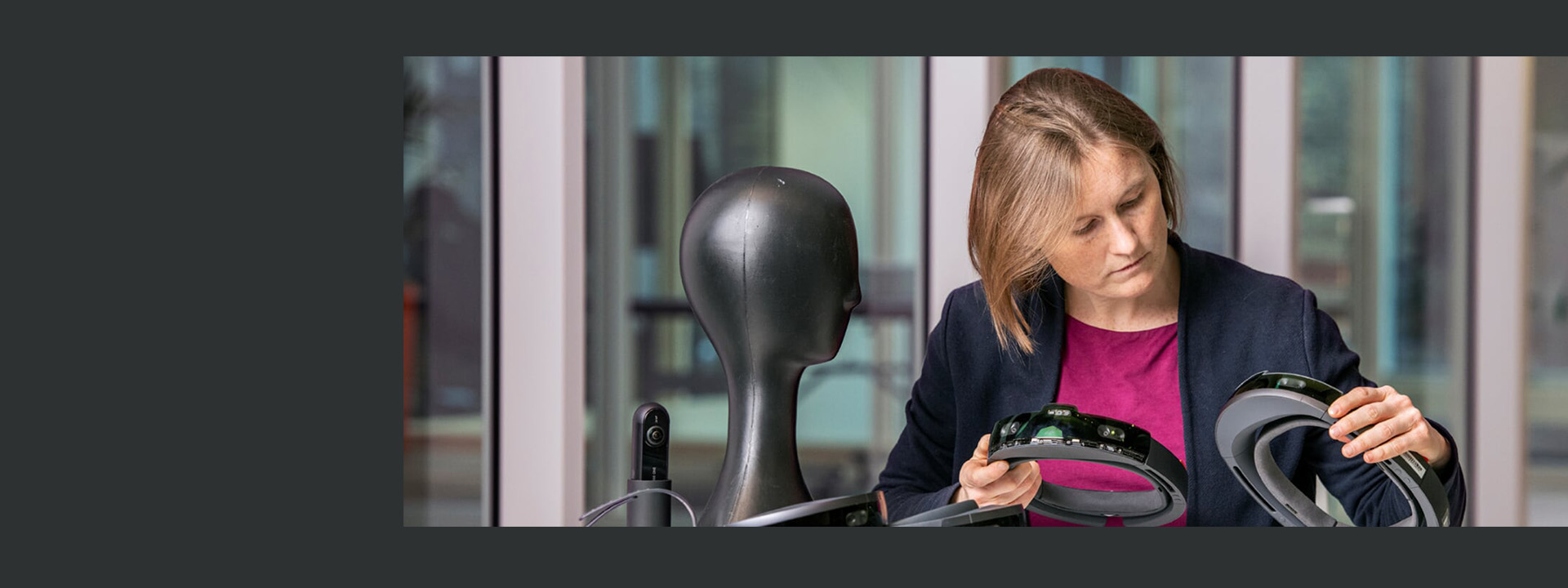
Is Sound the Secret Sauce for Making Immersive Experiences?
To build truly believable virtual environments, we need to believe our ears as much as our eyes.
 Research
Below please find an index of news and awards that recognize Microsoft researchers’ contribution to scientific research and commitment to advancing computer science.
To build truly believable virtual environments, we need to believe our ears as much as our eyes.
Microsoft is delivering the world’s first fully neural on device translations in the Microsoft Translator app for Android, customized for the Huawei Mate 10 series.
Today, with the launch of the Windows 10 Fall Creators Update, Microsoft is taking a big step forward on our journey to make our products more accessible and empower people with disabilities. Our teams have…
High Efficiency Video Coding, a technology standard that helps deliver ultra-high definition video to everything from smartphones to stadium displays, received a 2017 Primetime Engineering Emmy Award from the Academy of Television Arts & Sciences.…
John Krumm received a 10-Year Impact Award for his 2007 paper, Inference Attacks on Location Tracks, at the 2017 ACM Ubicomp Conference (opens in new tab), a gathering of experts in pervasive and ubiquitous computing. The paper…
Traditionally, software is produced in this way: write some code, maybe do some code review, run unit-tests, and then hope it is correct. Hard experience shows that it is very hard for programmers to write…
As a first step, Microsoft wants to teach machines to read so that they understand the text, because most of the medical knowledge lies in texts: endless information on biological processes, therapeutic mechanisms and clinical…
The Northwest Access Fund (opens in new tab) honored the Seeing AI project team with the Best Practices Award for a Large Business. Seeing AI is a smartphone camera application for the blind and low-vision community that…