

Microsoft Research Cambridge
News & features
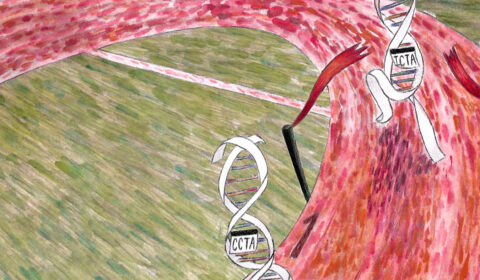
Scientists use machine learning to predict DNA binding rates from sequence
By Microsoft Research Lab – Cambridge and Department of Bioengineering, Rice University The binding of DNA strands by Watson-Crick base pairing is a fundamental process in biotechnology, which is used around the world for reading and writing DNA sequences and…
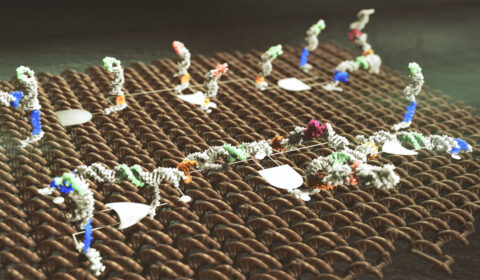
Researchers build nanoscale computational circuit boards with DNA
By Microsoft Research Human-engineered systems, from ancient irrigation networks to modern semiconductor circuitry, rely on spatial organization to guide the flow of materials and information. Living cells also use spatial organization to control and accelerate the transmission of molecular signals,…
In the news | Nature Nanotechnology
A spatially localized architecture for fast and modular DNA computing
Fast and scalable molecular logic circuits can be created through the spatial organization of DNA hairpins on DNA origami scaffolds.
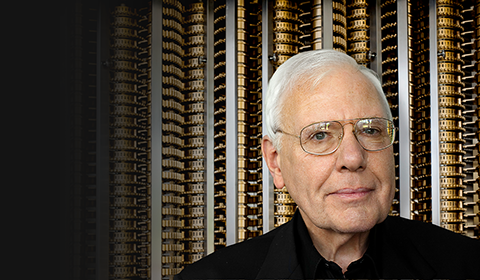
Honoring Charles P. Thacker, a visionary computer scientist who changed the world
By John Roach, Writer, Microsoft Research Charles P. Thacker, a visionary and hands-on electrical engineer who designed the first instances of key computing technologies that define modern life, died June 12 at his home in Palo Alto, California. He was…
In the news | Parkinson's Life
“Project Emma” tremor-reducing watch unveiled by Microsoft CEO
The team behind an innovative vibrating wristwatch that helped Emma Lawton—who lives with young-onset Parkinson’s disease—to draw again, introduced the device at a prestigious tech conference.

Presenting the winners of the Project Malmo Collaborative AI Challenge
By Noburu Kuno, Senior Research Program Manager; Scarlet Schwiderski-Grosche, Principal Research Program Manager As we move from narrow AI to more general AI, it will be important to instill machines with the ability to work together with both other agents…
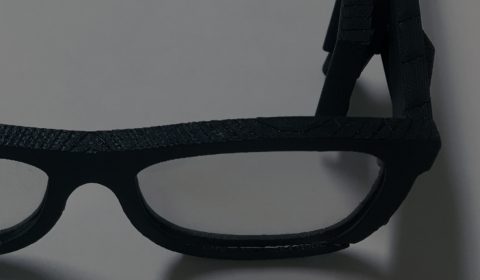
Holograms: The future of near-eye display?
By Andrew Maimone, Researcher; Andreas Georgiou, Researcher; Joel Kollin, Principal Research Hardware Development Engineer Last week at the SCIEN Workshop on Augmented and Mixed Reality, a group of industry and academic researchers met to discuss the future of virtual and mixed reality (VR/MR).…
In the news | The Verge
Microsoft’s Project Emma is a wearable that helps with Parkinson’s tremors
Microsoft has created a watch that the company says can help people with Parkinson’s disease write more clearly. The Emma Watch sends vibrations to the brain that help control hand tremors.
In the news | Microsoft Transform
“My God, it’s better”: Emma can write again thanks to a prototype watch, raising hope for Parkinson’s disease
Haiyan Zhang, a Microsoft researcher, to spend months studying Parkinson’s disease while building and testing prototypes that could, she hoped, temporarily short-circuit the hand tremors, allowing Lawton to write her own name again.